Introduction
Modern organisations generate enormous amounts of data through customers, transactions, websites, applications, sensors, and internal operations. Turning this information into useful knowledge requires more than simply collecting numbers. Statistical modelling systems help businesses examine patterns, understand relationships, estimate probabilities, and develop informed predictions that can support stronger and more confident decisions.
As data becomes increasingly important across industries, organisations need reliable methods for interpreting complex information. Statistical modelling systems provide a structured approach to analysing historical and current data while accounting for uncertainty. From forecasting demand to assessing risk, these systems can help decision-makers replace guesswork with evidence and develop strategies based on measurable insights.
What Are Statistical Modeling Systems?
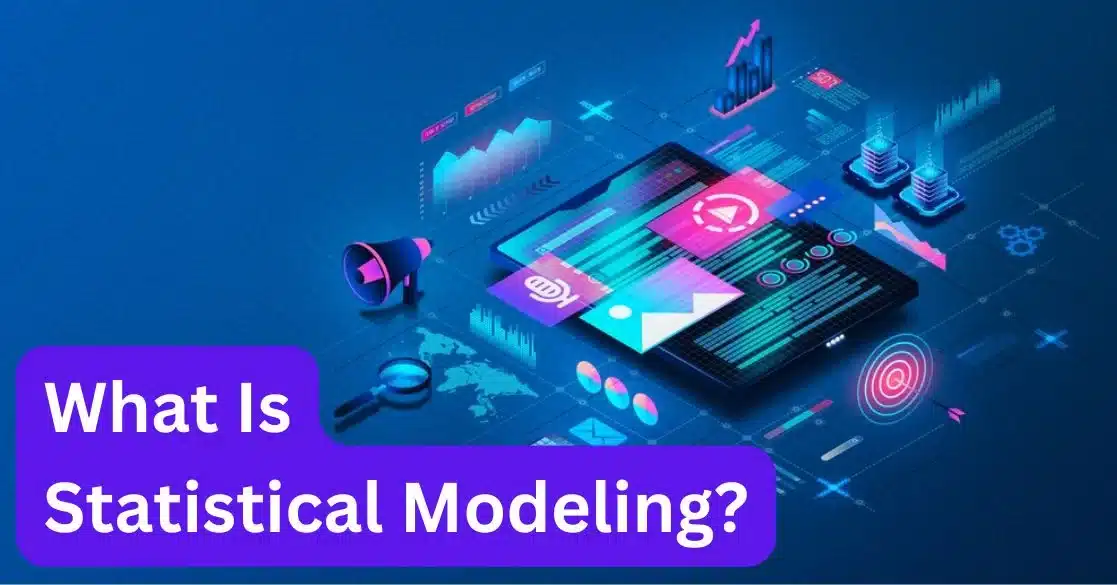
Statistical modelling systems are analytical frameworks or software-based environments designed to build, test, and use statistical models. These models examine relationships between variables and use available data to explain patterns or estimate possible outcomes. Depending on the objective, a system may analyse historical behaviour, identify important factors, forecast future trends, or measure the probability of particular events.
A typical modelling process involves collecting suitable data, preparing it for analysis, selecting variables, choosing a statistical technique, testing the resulting model, and interpreting its findings. The goal is not simply to produce complicated calculations but to create useful information that can guide practical decisions. Good statistical modelling connects mathematical analysis with real-world business questions.
How Statistical Modeling Systems Work
The process begins with data collection and preparation. Raw information may contain missing values, duplicate records, unusual observations, or inconsistent formats, so analysts must clean and organise it before modelling begins. Once the dataset is ready, analysts identify the variables that could influence the outcome and select a method appropriate for the question they want to answer.
After a model is developed, it needs to be tested and evaluated. Analysts may compare predicted results with known outcomes, examine statistical measures, and test whether the model performs reliably on new data. If the results are satisfactory, the model can support reporting or decision-making. Ongoing monitoring is also important because changing customer behaviour, markets, and economic conditions can affect performance.
Key Types of Statistical Models
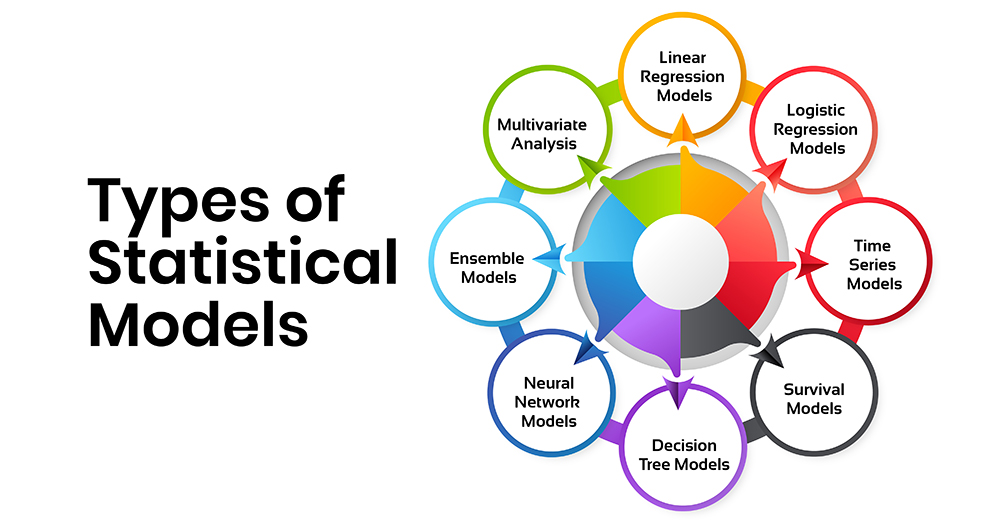
Regression models are among the most widely used statistical techniques. They help analysts examine relationships between variables and estimate how changes in one factor may relate to another. For example, a business could use regression to study how advertising expenditure, seasonal trends, and pricing relate to sales performance. Different regression techniques can be selected depending on the type and structure of the data.
Other approaches include classification, time-series analysis, probability models, clustering, and Bayesian methods. Time-series models are particularly useful for analysing information collected over time, while classification models can help assign observations to categories. Clustering can reveal natural groups within datasets, whereas Bayesian techniques allow analysts to combine existing knowledge with new evidence when estimating uncertain outcomes.
Benefits of Statistical Modeling Systems for Decision Making
One of the biggest advantages of statistical modelling is its ability to transform large datasets into understandable evidence. Instead of reviewing thousands of individual records manually, decision-makers can use model results to identify important trends and relationships. This can make planning more efficient and help organisations focus attention on the factors most strongly connected with their objectives.
Statistical modelling can also improve forecasting and risk assessment. Businesses can estimate future demand, identify potentially risky situations, evaluate possible scenarios, and allocate resources more effectively. Although no model can guarantee a future result, a well-designed analysis can provide probability-based insights that are more useful than relying entirely on intuition or assumptions.
Applications Across Industries
Finance uses statistical models for areas such as credit assessment, fraud detection, investment analysis, and financial forecasting. Healthcare organisations can analyse patient outcomes, resource requirements, and research data. Retailers can study purchasing behaviour, estimate demand, and improve inventory planning. Marketing teams can examine customer segments, campaign performance, and conversion patterns to make more informed decisions.
Manufacturing companies can use modelling to monitor quality, anticipate equipment problems, and improve production planning. Technology businesses can analyse user behaviour and application performance, while public-sector organisations can study population trends and economic indicators. These applications demonstrate why statistical modelling is valuable across many environments: the underlying methods can be adapted to different datasets, objectives, and decision-making challenges.
Statistical Modeling Systems and Predictive Analytics
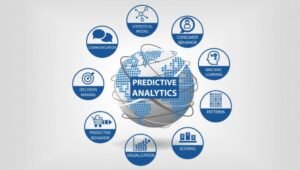
Predictive analytics focuses on using existing information to estimate what may happen in the future. Statistical modelling is an important foundation for this process because it provides techniques for identifying relationships, measuring uncertainty, and generating forecasts. A company, for example, might analyse previous sales, seasonal patterns, and customer behaviour to estimate likely demand for an upcoming period.
However, predictions should not be treated as guaranteed outcomes. Statistical models work with assumptions, probabilities, and historical evidence. Unexpected events can change the conditions on which a model was developed. For this reason, predictive results should be combined with expert judgement, current information, and scenario planning. This approach allows organisations to use predictions responsibly rather than treating them as absolute answers.
The Importance of Data Quality
The quality of a statistical model depends heavily on the quality of its input data. Missing information, inaccurate records, biased samples, or inconsistent measurements can influence the final results. Even an advanced modelling technique cannot automatically correct every problem in the underlying dataset. Organisations therefore need reliable processes for collecting, checking, cleaning, and maintaining their information.
Representative data is equally important. If a dataset does not accurately reflect the population or situation being studied, the resulting model may produce misleading conclusions. Analysts should examine where data came from, how it was collected, and whether important groups or situations are missing. Careful data preparation is one of the most important steps in creating trustworthy analytical results.
Choosing the Right Statistical Modeling System
Selecting a modelling system should begin with a clear understanding of the problem. Organisations should consider the type of data they have, the questions they need to answer, the size of their datasets, and the technical skills available within their teams. A system that is unnecessarily complicated may create additional costs without providing meaningful advantages.
Scalability, integration, security, reporting capabilities, and usability should also be considered. Organisations may need a solution that connects with existing databases or business applications and allows results to be shared with different teams. Cost is another factor, including implementation, training, maintenance, and future expansion. The best choice is usually the system that matches practical requirements rather than simply offering the greatest number of features.
Challenges and Limitations
Statistical modelling has limitations that should be understood before decisions are based on its results. Models rely on assumptions, and those assumptions may not always reflect real-world conditions. Overfitting can occur when a model performs extremely well on historical data but struggles with new information. Underfitting can have the opposite effect, producing a model that is too simple to capture important relationships.
Bias is another important concern. If historical data contains unfair or incomplete patterns, a model may reproduce those weaknesses. Complex models can also be difficult for non-technical users to interpret. These challenges make human oversight essential. Analysts should communicate uncertainty, document assumptions, validate results, and ensure that model outputs are considered alongside relevant business knowledge.
Statistical Modeling and Artificial Intelligence
Artificial intelligence and machine learning have expanded the possibilities for analysing large and complex datasets. While some AI techniques focus heavily on prediction and automated pattern recognition, traditional statistical modelling places considerable emphasis on relationships, uncertainty, assumptions, and interpretation. The two fields can overlap, but they are not identical.
Combining statistical principles with modern AI can create powerful analytical workflows. Automated tools may assist with data preparation, model selection, prediction, or monitoring, while statistical expertise can help evaluate whether results are meaningful and reliable. This combination can make advanced analysis more accessible while maintaining a focus on sound methodology and responsible interpretation.
Best Practices for Using Statistical Modeling Systems
Successful modelling begins with a clearly defined objective. Analysts should understand the decision the model is intended to support before choosing a technique. Reliable and relevant data should then be prepared carefully, while variables and assumptions should be documented. Models should be tested using appropriate validation methods rather than judged solely by how well they perform on historical information.
Organisations should also monitor models after deployment. Business conditions and customer behaviour can change, causing model performance to decline over time. Regular reviews can identify when a model needs adjustment or replacement. Clear communication is equally important because decision-makers need to understand what the results mean, what uncertainties exist, and where human judgement remains necessary.
The Future of Statistical Modeling Systems
The future of statistical modelling is likely to involve greater automation, faster analysis, and deeper integration with artificial intelligence. Cloud-based technologies can make analytical resources more scalable, while modern platforms can help organisations process larger datasets and generate insights more efficiently. Real-time information may also allow models to respond more quickly to changing market and operational conditions.
At the same time, transparency and responsible data use will remain important. Organisations will increasingly need to understand how models reach conclusions and whether their results are fair and reliable. As statistical modelling becomes more accessible to non-technical users, clear explanations and appropriate oversight will become even more valuable. Human judgement is likely to remain an essential part of responsible data-driven decision-making.
Conclusion
Statistical modelling systems provide organisations with structured methods for turning complex data into useful evidence. They can support forecasting, risk assessment, resource planning, customer analysis, and many other decisions. Their value comes from combining data with statistical methods that reveal relationships, estimate uncertainty, and help decision-makers understand possible outcomes.
However, effective modelling requires more than advanced technology. Reliable data, suitable methods, careful validation, transparent interpretation, and continuous monitoring are all essential. When these principles are followed, statistical modelling can become a powerful part of modern decision-making, helping organisations respond to changing conditions with greater clarity and confidence.
Frequently Asked Questions
What are statistical modeling systems?
Statistical modelling systems are tools and analytical frameworks used to create, evaluate, and apply statistical models. They help organisations analyse data, identify relationships, understand uncertainty, and generate estimates or forecasts for practical decision-making.
How do statistical modeling systems improve decision-making?
They provide evidence-based insights that can help organisations identify trends, forecast possible outcomes, assess risks, allocate resources, and evaluate different scenarios. This can reduce dependence on assumptions and support more informed decisions.
What are the main types of statistical models?
Common approaches include regression models, classification models, time-series models, probability models, clustering techniques, and Bayesian models. The appropriate method depends on the data and the question being investigated.
Are statistical modeling systems the same as artificial intelligence?
No. Statistical modelling and artificial intelligence can overlap, but they have different approaches and objectives. Statistical modelling often focuses strongly on relationships, inference, probability, and uncertainty, while AI can focus on automated learning, prediction, and pattern recognition.
Why is data quality important for statistical modelling?
Poor-quality data can produce unreliable or misleading results. Missing values, inaccurate records, biased samples, and inconsistent information can all affect model performance, making careful data preparation essential.
Can statistical models predict the future accurately?
Statistical models can estimate likely outcomes based on available evidence, but they cannot guarantee future events. Unexpected changes, inaccurate assumptions, or shifts in underlying patterns can affect predictions.
What are the main limitations of statistical modelling?
Important limitations include data bias, incorrect assumptions, overfitting, underfitting, limited data, changing conditions, and difficulties interpreting complex models. Human oversight is therefore important when using model results.
How can a business choose the right modelling system?
A business should consider its objectives, data types, dataset size, technical expertise, scalability needs, integration requirements, security, reporting features, and total cost. The right system should solve a genuine analytical problem without unnecessary complexity.