Introduction: Why Enterprise AI Adoption Matters
Enterprise AI adoption is rapidly becoming a strategic priority for organisations seeking to improve efficiency, innovation and long-term competitiveness. Artificial intelligence is no longer limited to experimental projects or technology departments. Businesses are increasingly integrating AI into daily operations, customer experiences, decision-making and internal workflows to create faster and more intelligent ways of working.
The real value of AI comes from using it to solve meaningful business problems rather than adopting technology simply because it is trending. A successful strategy connects artificial intelligence with measurable organisational goals, reliable data, skilled employees and responsible governance. This approach allows companies to move beyond small experiments and build sustainable AI-powered business transformation.
Understanding Enterprise AI Adoption
Enterprise AI adoption refers to the process of integrating artificial intelligence into an organisation’s systems, workflows and strategic operations. It can involve machine learning, predictive analytics, natural language processing, computer vision, generative AI and intelligent automation. The objective is to use these technologies to improve business outcomes while maintaining security, reliability and human oversight.
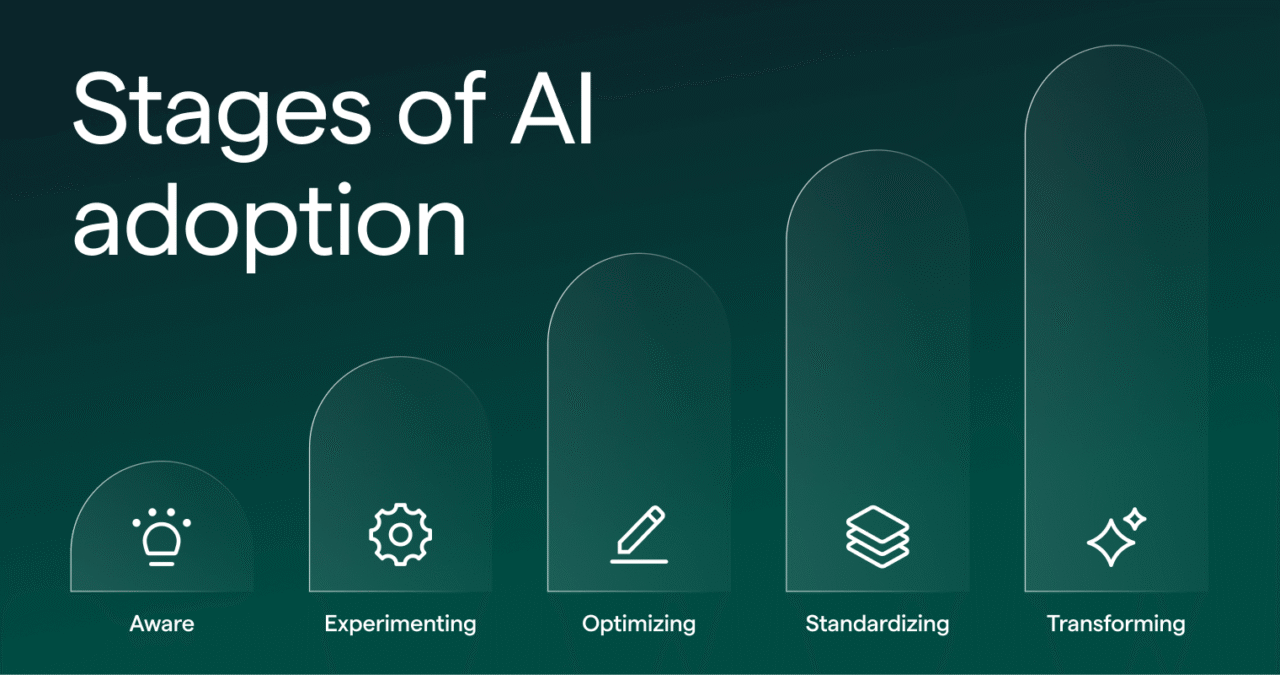
Successful adoption usually develops gradually. Organisations may begin by identifying a specific problem, testing an AI solution and measuring its results before expanding it across departments. This staged approach reduces unnecessary risks and helps businesses understand what works. Over time, successful AI initiatives can become part of broader digital transformation strategies.
Key Benefits of Enterprise AI Adoption
One of the strongest benefits of AI is its ability to automate repetitive and time-consuming tasks. Businesses can use intelligent systems to process information, analyse documents, respond to common customer questions and support routine administrative activities. Employees can then dedicate more time to creative thinking, strategic planning and complex tasks that require human judgement.
AI can also improve decision-making by analysing large amounts of information quickly. Predictive models can identify patterns, estimate demand and support business forecasting, while personalised AI systems can help organisations understand customer behaviour. When implemented correctly, these capabilities can contribute to better productivity, improved customer experiences and stronger competitive positioning.
Building an Effective Enterprise AI Strategy
A successful AI strategy should begin with business objectives rather than technology selection. Organisations need to identify problems where AI can deliver measurable value, such as reducing processing time, improving customer support or increasing operational accuracy. Prioritising practical use cases helps companies avoid investing heavily in projects that offer little strategic benefit.
Businesses should also create a clear roadmap covering experimentation, deployment, scaling and continuous improvement. Each project should have defined goals, responsible teams and measurable performance indicators. Organisations can then evaluate results before expanding successful solutions. This approach creates a structured path towards sustainable transformation while allowing companies to adapt as AI technologies evolve.
Data and Technology Infrastructure for AI Adoption

High-quality data is one of the foundations of successful AI implementation. Artificial intelligence systems depend on accurate, relevant and accessible information to generate useful results. Organisations with fragmented databases, outdated systems or poor data governance may struggle to achieve reliable AI performance, regardless of how advanced their chosen technology may be.
Technology infrastructure is equally important. Businesses need scalable computing resources, secure data environments and systems capable of connecting AI applications with existing enterprise software. Cloud platforms, application programming interfaces and modern data architectures can make integration easier. Preparing this foundation before large-scale deployment can help organisations avoid costly technical problems later.
Overcoming Enterprise AI Adoption Challenges
Despite its potential, enterprise AI adoption can create significant challenges. Employees may worry about automation, organisations may lack specialised AI skills and existing technology systems may be difficult to integrate. Businesses can also face concerns involving data privacy, cybersecurity, inaccurate outputs and the financial costs of developing and maintaining AI solutions.
These challenges require a structured approach rather than rushed implementation. Organisations should invest in employee education, strengthen data governance and establish clear security policies. Pilot programmes can provide an opportunity to identify weaknesses before systems are deployed widely. Regular monitoring is also essential because AI performance can change as data, business conditions and user requirements evolve.
The Role of Leadership and Employees in AI Transformation
Leadership plays a central role in successful AI transformation. Executives need to establish a clear vision, allocate appropriate resources and communicate why AI is being introduced. When employees understand the business purpose behind new technologies, they are more likely to participate positively in implementation and provide useful feedback.
Employee skills are equally important. Organisations should provide AI literacy programmes and role-specific training so workers understand how to use AI effectively and responsibly. The goal should not simply be to replace human activity but to create stronger collaboration between people and intelligent systems. Human expertise remains essential for judgement, creativity, accountability and complex decision-making.
AI Governance, Security and Responsible Adoption
Responsible AI requires clear governance. Organisations should establish policies covering data protection, access controls, model performance, transparency and human oversight. These safeguards can help reduce the risks associated with inaccurate outputs, biased decisions and inappropriate use of sensitive information. Strong governance also helps organisations build confidence among employees, customers and other stakeholders.
Cybersecurity should remain a priority throughout the AI lifecycle. Businesses need to monitor systems after deployment, review access permissions and assess potential vulnerabilities. Generative AI also creates additional considerations because employees may use external AI services to process company information. Clear internal policies can help organisations benefit from AI while protecting confidential data and maintaining compliance.
Generative AI and the Future of Enterprise AI Adoption
Generative AI is expanding the possibilities for business automation and knowledge work. Organisations can use generative systems to support content creation, research, software development, customer service, internal knowledge management and document processing. AI assistants can also help employees find information and complete routine tasks more efficiently.
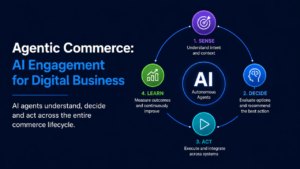
The next stage of transformation may involve increasingly autonomous AI agents capable of completing multi-step workflows. However, greater autonomy also requires stronger governance and monitoring. Businesses will need to balance speed and innovation with security, accountability and human control. Organisations that build flexible strategies will be better positioned to respond as AI capabilities continue to develop.
Best Practices for Successful Enterprise AI Adoption
A practical approach begins with clearly defined business problems and measurable outcomes. Companies should prioritise use cases based on potential value, technical feasibility and organisational readiness. Starting with manageable projects can help teams develop experience, demonstrate results and gain internal support before expanding AI across larger parts of the organisation.
Continuous improvement should remain part of the process. Businesses need to monitor performance, collect employee and customer feedback, review costs and update systems when requirements change. Cross-functional collaboration is also valuable because successful AI initiatives often require expertise from technology, operations, legal, security and business teams rather than one department working alone.
Measuring the Success of Enterprise AI Adoption
Measuring AI success requires more than counting how many tools an organisation has deployed. Businesses should evaluate outcomes such as productivity improvements, reduced costs, increased revenue, faster processes and improved customer satisfaction. Employee adoption can also provide useful insight into whether AI solutions are genuinely improving everyday workflows.
Return on investment should be considered alongside strategic value. Some AI projects may deliver immediate savings, while others create long-term benefits through improved decision-making or new business opportunities. Regular performance reviews allow organisations to identify successful initiatives, improve weaker systems and decide where additional investment can create the greatest impact.
Conclusion: Turning AI Adoption Into Long-Term Business Transformation
Enterprise AI adoption is becoming an important part of modern business transformation, but successful implementation requires more than purchasing sophisticated technology. Organisations need clear objectives, reliable data, appropriate infrastructure, skilled employees and strong governance. When these elements work together, AI can become an integrated capability that supports smarter decisions and more efficient operations.
The most successful organisations will treat AI as an ongoing transformation rather than a one-time technology project. By starting with valuable use cases, measuring results and continuously improving their approach, businesses can build a more adaptable and innovative future. Strategic AI adoption can ultimately help organisations respond faster to changing markets while creating sustainable long-term value.
FAQs About Enterprise AI Adoption
What is enterprise AI adoption?
Enterprise AI adoption is the process of integrating artificial intelligence into business systems, workflows and decision-making processes. It can include technologies such as machine learning, predictive analytics, generative AI and intelligent automation.
Why is enterprise AI adoption important for businesses?
AI can help organisations improve productivity, automate repetitive work, analyse information and deliver more personalised customer experiences. It can also support innovation and help businesses remain competitive in rapidly changing markets.
What are the biggest challenges of enterprise AI adoption?
Common challenges include poor data quality, cybersecurity concerns, employee resistance, integration difficulties, limited AI expertise and implementation costs. Strong governance, training and phased deployment can help organisations address these obstacles.
How can a company start its AI adoption journey?
A company can begin by identifying specific business problems where AI could provide measurable value. It can then assess data and infrastructure readiness, select an appropriate solution, run a controlled pilot and measure the results before scaling.
How can businesses measure the ROI of AI?
Businesses can measure AI ROI through productivity gains, cost reductions, revenue growth, process improvements, customer satisfaction and employee adoption. Comparing these results with implementation and maintenance costs provides a clearer picture of overall value.
What role does generative AI play in enterprise transformation?
Generative AI can support content creation, research, coding, customer service, knowledge management and document processing. It can also provide AI assistants that help employees complete routine knowledge-based tasks more efficiently.
How can organisations ensure responsible AI adoption?
Organisations should establish clear governance policies covering data privacy, security, transparency, human oversight and system monitoring. Regular risk assessments and employee training can further support safe and responsible AI use.