Introduction: Why Commercial AI Integration Matters
Commercial AI integration is changing how modern organisations approach productivity, customer engagement and business growth. Artificial intelligence is no longer restricted to experimental technology teams. Companies are connecting AI with everyday commercial processes to automate repetitive work, analyse information and create more personalised experiences. This shift is helping businesses respond faster while making better use of their existing resources.
The real opportunity comes from integrating AI into meaningful business workflows rather than simply purchasing another software tool. When AI is connected to clear commercial objectives, reliable data and suitable infrastructure, it can become a practical business capability. Organisations can use this approach to improve efficiency, strengthen decision-making and discover new opportunities without losing human oversight.
Understanding Commercial AI Integration
Commercial AI integration involves connecting artificial intelligence technologies with existing business systems, processes and workflows. These technologies can include machine learning, predictive analytics, natural language processing and generative AI. Instead of operating as isolated applications, integrated AI solutions can interact with customer relationship management platforms, financial systems, marketing tools and other commercial technologies.
The purpose is to make AI useful within the flow of everyday business activity. For example, an AI system might analyse customer information, predict demand or help sales teams identify promising opportunities. This makes AI more than a standalone tool; it becomes part of an interconnected business environment designed to support measurable commercial outcomes.
Key Benefits of Commercial AI Integration
One major advantage of AI integration is automation. Businesses can use intelligent systems to handle repetitive activities such as document processing, customer enquiries, data analysis and routine reporting. Automating these tasks can reduce manual workloads and allow employees to spend more time on strategic thinking, creative work and activities that require human judgement.
AI can also improve how businesses understand customers and markets. Predictive analytics can identify patterns in large datasets, while intelligent personalisation can help companies deliver more relevant products, services and communications. When used effectively, these capabilities can improve customer satisfaction, operational efficiency and revenue opportunities while helping organisations compete in increasingly digital markets.
Building a Successful Commercial AI Integration Strategy
A strong AI strategy should begin with a business problem rather than a technology trend. Organisations should identify areas where AI can deliver measurable improvements, such as reducing processing time, increasing sales efficiency or improving customer support. Choosing use cases based on real commercial needs makes it easier to demonstrate value and secure support for wider implementation.
Businesses should also create a practical roadmap for implementation. This roadmap can define suitable technologies, responsible teams, expected outcomes and performance indicators. Starting with manageable pilot projects allows organisations to test assumptions before scaling successful solutions. This phased approach can reduce risk while creating valuable experience for future AI initiatives.
AI Integration Across Business Operations

AI can support almost every major commercial function. Sales teams can use intelligent tools for lead scoring, customer research and forecasting, while marketing departments can apply AI to segmentation, campaign analysis and content workflows. Customer service teams can use virtual assistants to answer routine questions and help customers find information more quickly.
Other departments can benefit as well. Finance teams can use predictive models for forecasting and anomaly detection, while supply chain teams can improve demand planning and inventory management. Human resources departments can use AI for administrative support and workforce analysis. The most valuable implementations are those that connect these capabilities with wider business processes rather than keeping them isolated.
Data and Technology Requirements for AI Integration
Reliable data is fundamental to effective AI implementation. Artificial intelligence systems depend on accurate and relevant information to produce useful results. Businesses with fragmented databases, outdated records or inconsistent data standards may struggle to achieve reliable outcomes. Strong data governance can therefore provide the foundation required for successful AI deployment.
Technology infrastructure also matters. Companies may need cloud services, secure data platforms, APIs and integration tools to connect AI applications with existing software. Legacy systems can create additional technical challenges, particularly when they were not designed to exchange information easily. A scalable technology environment allows organisations to expand AI usage as their commercial requirements grow.
Overcoming Commercial AI Integration Challenges
Despite its benefits, commercial AI integration can present several challenges. Businesses may encounter compatibility problems, data silos, cybersecurity concerns and unexpected implementation costs. Employees may also be uncertain about automation and worry that new technologies will change their roles. Without careful planning, these challenges can slow adoption and reduce the value of otherwise promising AI projects.
A phased implementation can help organisations manage these risks. Businesses can begin with controlled projects, assess performance and address technical or organisational problems before expanding. Employee training is equally important because workers need to understand how AI operates and how it can support their responsibilities. Continuous monitoring can then help organisations maintain performance and manage emerging risks.
The Role of Employees and Leadership in AI Integration
Leadership provides the direction required for successful AI transformation. Business leaders should communicate clear objectives and explain how AI supports wider commercial priorities. Strong leadership also ensures that AI projects receive appropriate resources and that technology teams work closely with departments that understand customer and operational requirements.
Employees are equally important to successful implementation. Training programmes can improve AI literacy and help workers understand how to use intelligent systems responsibly. Rather than treating AI purely as a replacement for human work, organisations can focus on collaboration. AI can handle repetitive analysis and routine tasks while employees provide creativity, judgement, communication and strategic thinking.
AI Security, Governance and Responsible Commercial Integration
Security and governance should be built into AI projects from the beginning. Businesses need clear policies covering data access, privacy, system monitoring and the responsible use of AI-generated information. These measures are particularly important when AI systems process customer records, financial information or confidential commercial data.
Responsible AI also requires human oversight. AI systems can sometimes produce inaccurate, biased or misleading results, especially when the underlying data is incomplete or unsuitable. Businesses should establish processes for reviewing important outputs and correcting errors. Strong governance helps protect customers and employees while supporting greater trust in AI-powered commercial operations.
Generative AI and the Future of Commercial AI Integration
Generative AI is expanding the range of tasks that businesses can automate and enhance. Organisations can use it for content creation, research, software development, customer communication, document analysis and internal knowledge management. AI assistants can also help employees find information, summarise documents and complete routine knowledge-based activities more efficiently.
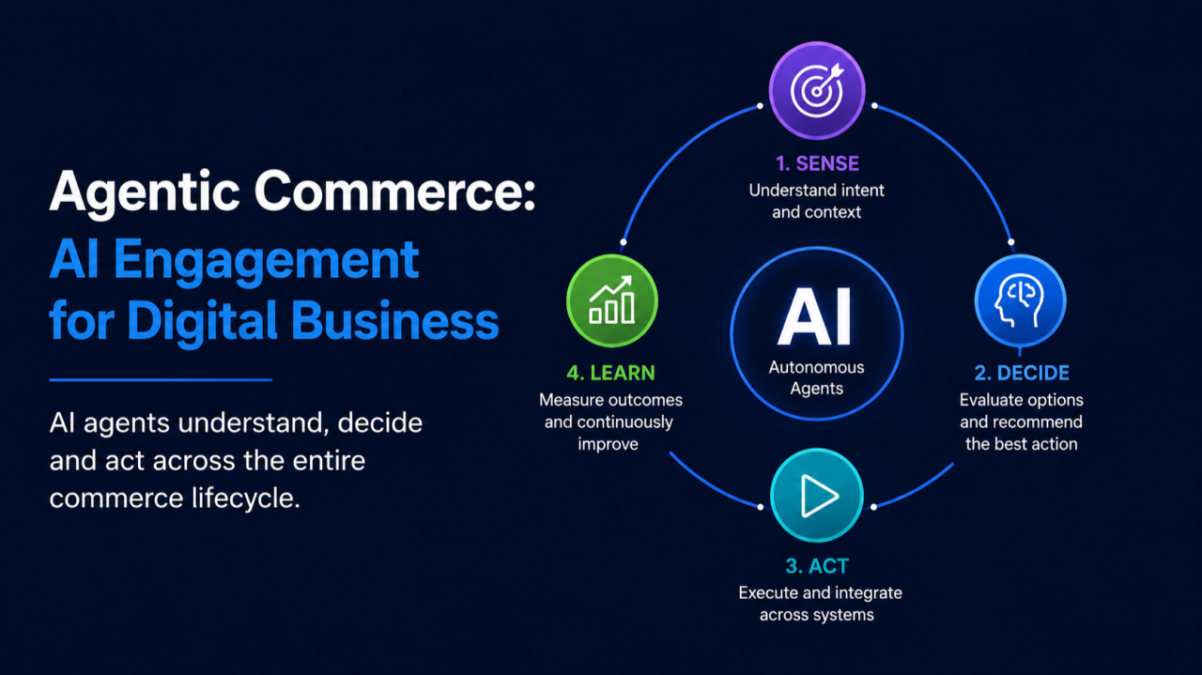
The future may bring increasingly capable AI agents that can manage multi-step commercial workflows. These systems could potentially coordinate tasks across different applications, analyse information and recommend actions with limited human intervention. However, greater autonomy will require stronger governance, security and monitoring. Businesses will need to balance innovation with responsible control as AI capabilities continue to advance.
Best Practices for Successful Commercial AI Integration
Successful implementation starts with clear objectives and measurable outcomes. Businesses should prioritise AI projects according to potential value, technical feasibility and organisational readiness. Selecting practical use cases allows companies to demonstrate benefits sooner while building internal confidence. It is also important to choose solutions that can integrate effectively with existing systems.
Continuous improvement should remain part of the strategy. Organisations should monitor performance, collect employee feedback, evaluate costs and update systems when requirements change. Cross-functional collaboration can further improve results because AI projects often involve technology, operations, finance, marketing, security and management. A coordinated approach helps ensure that AI supports the wider organisation rather than one isolated department.
Measuring the Success of Commercial AI Integration
Measuring AI success requires more than tracking how many systems have been introduced. Businesses should examine practical outcomes such as productivity, process efficiency, cost savings, revenue growth and customer satisfaction. Employee adoption can also reveal whether a solution is genuinely useful or whether workers are struggling to incorporate it into everyday processes.
Return on investment should be assessed alongside long-term strategic value. Some AI initiatives may generate immediate savings, while others can create opportunities through improved forecasting, customer engagement or new services. Regular reviews allow businesses to identify successful projects, improve weaker implementations and direct future investment towards AI initiatives with the strongest commercial potential.
Conclusion: Turning AI Integration Into Sustainable Business Growth
Commercial AI integration can help businesses build smarter, faster and more adaptable operations. However, meaningful results depend on more than advanced technology. Organisations need reliable data, appropriate infrastructure, capable employees, strong leadership and responsible governance. When these elements work together, AI can become a practical part of business strategy rather than an isolated technological experiment.
The most successful businesses will approach AI integration as an ongoing process. By identifying valuable use cases, testing solutions, measuring outcomes and continuously improving implementation, organisations can create sustainable commercial value. Strategic use of artificial intelligence can ultimately support stronger productivity, better customer experiences, improved decision-making and long-term business growth.
FAQs About Commercial AI Integration
What is commercial AI integration?
Commercial AI integration is the process of connecting artificial intelligence technologies with existing business systems, workflows and processes. It allows organisations to use AI for practical commercial activities such as automation, forecasting, customer service and decision-making.
Why is commercial AI integration important for businesses?
AI integration can improve productivity, automate repetitive tasks, support better decisions and create more personalised customer experiences. It can also help businesses identify new opportunities and respond more effectively to changing market conditions.
What are the main benefits of integrating AI into business operations?
The main benefits include greater efficiency, reduced manual workloads, improved forecasting, enhanced customer experiences, faster data analysis and potential cost savings. AI can also support innovation and help businesses develop new products or services.
How can a business start integrating AI?
A business can begin by identifying a specific commercial problem that AI could solve. It should then assess data and technology readiness, choose an appropriate solution, run a controlled pilot and measure the results before expanding the project.
What challenges can businesses face during AI integration?
Common challenges include poor data quality, legacy technology, cybersecurity risks, implementation costs, skills shortages and employee resistance. Careful planning, training, governance and phased deployment can help organisations manage these challenges.
How does generative AI support commercial businesses?
Generative AI can support content creation, research, customer communication, document processing, software development and knowledge management. It can also provide intelligent assistants that help employees complete routine tasks more efficiently.
How can businesses measure the success of AI integration?
Businesses can measure success through productivity improvements, cost reductions, revenue growth, customer satisfaction, process efficiency and employee adoption. Comparing these outcomes with implementation and maintenance costs can help determine overall return on investment.
Is AI integration suitable for small and medium-sized businesses?
Yes. Smaller businesses can begin with focused AI applications such as customer support, marketing automation, data analysis or administrative tasks. Starting with affordable, high-value use cases can allow them to gain experience before expanding into more advanced solutions.
What is the future of commercial AI integration?
The future is likely to involve more intelligent automation, AI agents, predictive systems and personalised customer experiences. As AI becomes increasingly connected to business software, organisations may be able to automate more complex workflows while maintaining human oversight.