Introduction to Predictive Algorithms
Predictive algorithms are changing the way organisations understand data, anticipate trends and make business decisions. By analysing historical information and recognising patterns, these technologies can estimate what is likely to happen next. Their growing connection with artificial intelligence and machine learning allows companies to move beyond traditional forecasting methods and make decisions using increasingly detailed and timely insights.
Modern businesses generate enormous amounts of information through sales, websites, customer interactions, financial systems and connected devices. Predictive algorithms can turn this information into useful forecasts that support planning and strategy. From predicting customer demand to identifying potential risks, AI-powered forecasting is becoming an important part of data-driven business operations across many industries.
How Predictive Algorithms Work
Predictive algorithms begin with data. A business may provide historical sales figures, customer behaviour, market information or operational records to a machine learning model. The system analyses relationships and patterns within the information, learns from previous outcomes and uses those patterns to produce predictions about future events or behaviours.
The process generally involves collecting relevant data, cleaning it, selecting useful variables, training a model and testing its performance. Once a suitable model has been developed, it can generate forecasts using new information. As fresh data becomes available, businesses can monitor and refine their models to help maintain useful predictions as circumstances change.
The Role of AI and Machine Learning in Business Forecasting
Artificial intelligence has expanded the possibilities of business forecasting by enabling systems to analyse complex datasets and recognise relationships that may be difficult to identify manually. Machine learning models can examine numerous variables simultaneously, helping businesses discover patterns in customer behaviour, demand, financial activity and operational performance that traditional forecasting techniques may overlook.
Predictive algorithms also allow forecasting systems to become more responsive. Instead of relying exclusively on fixed assumptions, machine learning models can be updated with new information and adjusted when patterns change. However, human expertise remains important because managers must interpret predictions, consider business circumstances and decide how forecasts should influence real-world decisions.
Business Applications of Predictive Algorithms
One major application is sales and demand forecasting. Businesses can analyse previous purchases, seasonal trends, customer activity and market conditions to estimate future demand. Retailers may use these insights to plan inventory, while manufacturers can adjust production according to expected requirements. This can reduce waste, improve stock availability and help companies allocate resources more effectively.
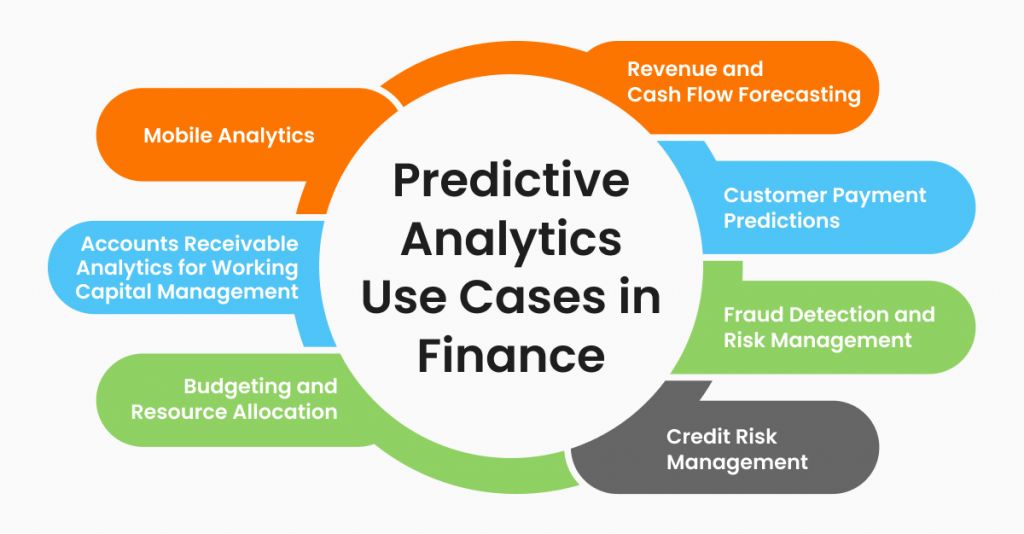
Predictive algorithms are also valuable in finance, marketing, logistics and manufacturing. Financial organisations can assess risk and detect unusual activity, while marketers can anticipate customer preferences and improve campaign targeting. Manufacturers can predict equipment failures before serious problems occur, and logistics companies can use forecasts to improve delivery planning, capacity management and supply chain decisions.
Benefits of Predictive Algorithms for Businesses
One of the biggest advantages is improved decision-making. Instead of relying entirely on intuition or historical averages, organisations can use data-based forecasts to evaluate possible future outcomes. This can help managers identify opportunities, prepare for potential challenges and allocate budgets or resources more strategically. Better forecasting can also support more consistent planning across different departments.
Another benefit is operational efficiency. When businesses understand likely demand, they can reduce unnecessary stock, manage staffing requirements and improve supply chain coordination. Predictive technology can also contribute to better customer experiences by helping companies understand changing preferences. When used responsibly, these capabilities can create measurable improvements while giving businesses greater confidence in their planning processes.
Challenges and Limitations of Predictive Algorithms
Forecasting technology is only as reliable as the information behind it. Poor-quality, incomplete or outdated data can produce misleading results, even when sophisticated machine learning techniques are involved. Bias within historical datasets can also influence predictions and potentially reinforce existing patterns. For this reason, businesses need strong data management practices before relying heavily on automated forecasts.
Unexpected events create another important limitation. Economic shocks, sudden changes in consumer behaviour, supply disruptions or major market developments may not resemble anything contained within historical training data. Businesses must therefore avoid treating forecasts as guaranteed outcomes. Privacy, transparency, cybersecurity, implementation costs and the need for specialist expertise are additional considerations when introducing AI-based forecasting systems.
Real-Time Business Forecasting
Real-time data is making business forecasting increasingly dynamic. Instead of producing a forecast once and leaving it unchanged, organisations can use continuously updated information to identify emerging trends. For example, changes in website activity, customer orders or inventory levels can provide immediate signals that demand may be shifting, allowing businesses to respond more quickly.
This approach is particularly useful in fast-moving industries where conditions can change rapidly. Real-time forecasting can support dynamic pricing, inventory management, fraud monitoring and supply chain decisions. However, businesses need dependable data pipelines, reliable infrastructure and effective monitoring to ensure that rapidly generated predictions remain relevant and do not respond unnecessarily to temporary fluctuations.
Choosing the Right Predictive Algorithm
There is no single model that works perfectly for every forecasting problem. Businesses may use techniques such as linear regression, decision trees, random forests, neural networks or specialised time-series models depending on their objectives. The appropriate choice can depend on factors including dataset size, available computing resources, required accuracy and the complexity of the relationships being analysed.
Businesses should also consider interpretability and practical usability when selecting a model. A highly complex system may produce strong results but could be difficult for decision-makers to understand. Testing different approaches against suitable datasets can reveal which model performs best. The goal should be to select a solution that balances accuracy, reliability, transparency and business value.
Implementing Predictive Algorithms Successfully
Successful implementation starts with a clearly defined business problem. Organisations should identify what they want to predict and how the prediction will support a measurable decision. Relevant data can then be collected, cleaned and prepared before an appropriate model is selected. Testing should be performed using suitable data to determine whether the model produces dependable results.
After deployment, businesses should continue monitoring model performance rather than assuming it will remain accurate indefinitely. Markets, customers and operational conditions can change, making previously useful patterns less reliable. Regular evaluation and retraining can help maintain performance. Clear governance, appropriate security controls and human oversight should also be included within the implementation strategy.
The Future of Predictive Algorithms in Business Forecasting
The future of business forecasting is likely to involve increasingly intelligent systems capable of analysing larger datasets and responding to changes more quickly. Advances in machine learning, cloud computing and automated analytics may make sophisticated forecasting accessible to more organisations. Businesses could increasingly use AI to identify emerging opportunities and risks before they become obvious through conventional analysis.
Generative AI may also work alongside predictive systems by helping employees interpret forecasts, summarise trends and explore possible scenarios. At the same time, explainability and responsible AI will become increasingly important as businesses use automated predictions in sensitive areas. The strongest forecasting strategies are likely to combine advanced technology with human judgement, sound data practices and clear accountability.
Conclusion
AI-powered forecasting is reshaping how businesses understand uncertainty and prepare for the future. Predictive algorithms can analyse historical and real-time information, identify meaningful patterns and provide estimates that support decisions across sales, finance, marketing, manufacturing and supply chains. Their value comes not simply from producing predictions, but from helping organisations turn data into practical and timely business actions.
Despite their potential, forecasting models should never be viewed as perfect sources of truth. Data quality, changing market conditions, bias and unexpected events can all affect results. Businesses that combine reliable information, appropriate technology, continuous monitoring and human judgement can gain greater value from predictive forecasting while reducing unnecessary risks.
Frequently Asked Questions About Predictive Algorithms
What are predictive algorithms?
Predictive algorithms are computational methods that analyse historical and current data to estimate likely future outcomes. They can identify patterns and relationships within datasets and use those findings to support forecasts involving sales, customer behaviour, demand, financial risk and other business activities.
How do predictive algorithms help businesses?
They can help businesses make more informed decisions by forecasting demand, identifying risks, understanding customer behaviour and improving resource planning. These insights may support better inventory management, marketing strategies, financial planning, operational efficiency and long-term business forecasting.
How does AI improve business forecasting?
AI can process large and complex datasets while identifying relationships that may be difficult to recognise through manual analysis. Machine learning can also adapt models as new information becomes available, helping businesses create more responsive forecasts when market conditions and customer behaviour change.
Are predictive algorithms always accurate?
No. Forecasts are estimates rather than guarantees. Their accuracy depends on data quality, model selection, historical patterns and changing external conditions. Unexpected events can reduce reliability, which is why businesses should monitor forecasting performance and combine automated predictions with human judgement.
Which industries use predictive algorithms?
Predictive technology is used across many sectors, including retail, finance, manufacturing, logistics, marketing, technology and healthcare. Common applications include demand forecasting, customer analysis, risk assessment, equipment maintenance, fraud detection, inventory planning and supply chain optimisation.
What are the main challenges of using predictive algorithms?
Common challenges include poor-quality data, algorithmic bias, privacy concerns, implementation costs and technical complexity. Businesses may also struggle when market conditions change unexpectedly. Effective data governance, regular model evaluation and appropriate human oversight can help address these challenges.
Can small businesses use predictive algorithms?
Yes. Cloud-based analytics platforms and AI services have made advanced forecasting more accessible to smaller organisations. A small business can begin with a specific problem, such as sales or inventory forecasting, and gradually expand its use of data-driven prediction as its capabilities develop.
What is the future of predictive algorithms?
The technology is expected to become more automated, responsive and accessible as AI and machine learning continue to advance. Businesses are likely to combine predictive forecasting with real-time analytics and generative AI, creating decision-support systems that can help organisations respond proactively to changing conditions.