Introduction to Digital Generation Platforms
Digital generation platforms are changing how businesses and individuals create, manage, and deliver digital experiences. By combining artificial intelligence, automation, cloud computing, and intelligent software, these platforms can simplify tasks that once required significant time and technical expertise. From generating content to developing applications, they are helping organisations turn ideas into practical digital outputs more quickly and efficiently.
The growth of AI has accelerated this transformation, making digital creation more accessible to people with different levels of technical knowledge. Digital generation platforms can support marketers, developers, designers, entrepreneurs, and businesses by automating repetitive processes while providing tools for experimentation and innovation. As technology continues to advance, these platforms are becoming an increasingly important part of modern digital workflows.
What Are Digital Generation Platforms?
Digital generation platforms are software environments designed to help users produce digital content, assets, applications, or automated processes. Depending on the platform, users may be able to generate written content, images, videos, software code, documents, data-driven outputs, or complete workflows. Many platforms use AI to understand instructions and produce results based on user requirements.
Unlike traditional software, these platforms can reduce the amount of manual work required to achieve a specific result. A user may provide a prompt, template, set of instructions, or source information, and the platform can transform that input into a usable digital output. This approach makes digital creation faster while allowing teams to experiment with ideas without starting every project from scratch.
How Digital Generation Platforms Work
Most digital generation platforms combine several technologies behind a simple user interface. Artificial intelligence models interpret instructions, automation systems manage processes, and cloud infrastructure provides the computing power required to generate outputs. Some platforms also connect with external applications through APIs, allowing generated content or information to move smoothly between different business systems.
The process usually begins with an input, such as a written instruction, uploaded document, dataset, template, or design requirement. The platform processes that information and generates an appropriate output. Users can then review, edit, refine, or regenerate the result. This combination of automation and human input creates a flexible workflow that can support both simple and complex digital projects.
Key Features of Digital Generation Platforms
One important feature is AI-powered generation. Depending on the service, users can create text, graphics, audio, video, code, presentations, reports, and other digital assets. Templates and reusable workflows can also make repeated tasks easier, particularly for organisations producing large amounts of content or managing regular operational processes.
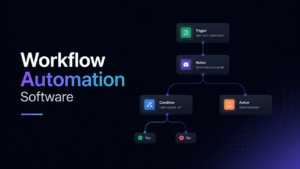
Automation is another major capability. Instead of completing repetitive actions manually, users can create workflows that trigger specific tasks automatically. Integrations, APIs, collaboration features, analytics, and cloud-based access can further improve productivity. These features allow digital generation platforms to become part of broader business systems rather than functioning as isolated creative tools.
Benefits of Digital Generation Platforms for Businesses
Businesses can use digital generation platforms to reduce the time required for many everyday activities. Content teams can accelerate research and drafting, marketing departments can produce campaign materials, and development teams can explore software ideas more quickly. By reducing repetitive work, employees can spend more time on strategy, customer relationships, creative thinking, and decision-making.
Another advantage is scalability. A small business may use automated generation tools to produce professional digital materials without maintaining a large specialist team. Larger organisations can integrate these capabilities into established workflows to support higher volumes of work. When implemented carefully, digital generation platforms can therefore improve efficiency while helping organisations respond more quickly to changing customer and market demands.
Digital Generation Platforms Across Different Industries
The applications of these platforms extend across many industries. In marketing, they can support content creation, campaign development, customer personalisation, and social media planning. E-commerce businesses can use them for product descriptions, promotional materials, customer recommendations, and other digital assets. Education providers can create learning resources, lesson materials, and personalised study content.
Software companies can use AI-powered platforms for code assistance, documentation, testing, and rapid prototyping. Professional services firms may use them to prepare reports, presentations, research summaries, and internal documents. Other sectors, including finance, healthcare, media, and entertainment, can also benefit from automated digital workflows, provided appropriate security, accuracy, privacy, and regulatory requirements are considered.
Digital Generation Platforms and Artificial Intelligence
Artificial intelligence is at the heart of many modern generation platforms. Generative AI allows software to interpret natural-language instructions and create new digital outputs based on learned patterns and available information. This capability has expanded digital creation beyond conventional menus, forms, and manual editing processes.
Modern AI systems can work across several formats, including text, images, audio, video, and programming code. Multimodal technology is also making it possible for platforms to understand different types of information within a single workflow. However, AI-generated results should still be reviewed by people, particularly when accuracy, originality, brand reputation, privacy, or professional judgement is important.
Digital Generation Platforms vs Traditional Digital Tools
Traditional digital tools generally require users to perform many steps manually. They can provide excellent control and precision, but producing a finished result may involve multiple stages of editing, formatting, testing, or configuration. Generation platforms introduce greater automation by allowing users to describe what they want and letting intelligent systems handle parts of the production process.
This does not mean traditional software is becoming irrelevant. In many situations, the strongest approach is to combine both technologies. Generation platforms can accelerate research, ideation, and initial production, while traditional tools can provide detailed control during final editing. This combination allows organisations to benefit from automation without sacrificing quality or creative direction.
How Digital Generation Platforms Are Transforming Digital Innovation
Digital innovation often begins with an idea, but turning that idea into something practical can require considerable resources. Generation platforms can shorten this journey by helping teams create prototypes, test concepts, develop content, and experiment with different solutions. Faster experimentation can allow organisations to learn what works before committing substantial time or investment.
These platforms can also make digital creation more accessible. People who do not have advanced programming or design skills may be able to build useful outputs through natural-language instructions, templates, and visual interfaces. This democratisation of technology can encourage more employees to participate in innovation and help businesses discover ideas from a wider range of teams.
Challenges and Limitations of Digital Generation Platforms
Despite their advantages, generation platforms are not without challenges. AI-generated information can sometimes contain inaccuracies, inconsistencies, or unsuitable recommendations. Businesses must therefore establish review processes to ensure that generated outputs meet quality standards. Human judgement remains particularly important when content involves technical, financial, legal, medical, or sensitive information.
Privacy and intellectual property are also important considerations. Organisations should understand how platforms handle uploaded information, whether data is stored, and what security measures are available. Copyright requirements can also vary depending on the content and the platform involved. Careful policies, responsible usage, and appropriate employee training can help reduce these risks.
How to Choose the Right Digital Generation Platform
Choosing a suitable platform should begin with a clear understanding of the intended purpose. Businesses should identify the tasks they want to improve before comparing features or pricing. A platform designed primarily for content generation may not provide the workflow automation, development features, integrations, or security controls required for a larger organisation.
Scalability is another important consideration. Companies should examine whether a platform can support increasing workloads and whether it integrates with existing software. Security, privacy, ease of use, customer support, reliability, pricing, and API availability should also be assessed. Selecting technology based on practical business requirements rather than trends can lead to stronger long-term results.
Best Practices for Using Digital Generation Platforms
Successful adoption requires more than simply purchasing access to a generation platform. Organisations should establish clear objectives, develop consistent workflows, and train employees to use AI responsibly. Providing precise instructions and high-quality source information can also improve the quality of generated results.
Human oversight should remain part of important workflows. Employees can check facts, review tone, identify errors, protect confidential information, and ensure that final outputs meet organisational standards. Businesses should also monitor performance regularly and update their processes as the technology develops. A thoughtful approach can turn automation into a reliable productivity advantage.
The Future of Digital Generation Platforms
The future of digital creation is likely to become increasingly intelligent, automated, and interconnected. Platforms are expected to support more advanced multimodal capabilities, allowing users to work with text, images, audio, video, code, and data within connected environments. AI agents may also handle longer sequences of tasks with less manual intervention.
As these technologies mature, digital generation platforms could become embedded into everyday business operations rather than being used only for individual projects. More accessible no-code and low-code experiences may also allow non-technical users to create sophisticated digital solutions. At the same time, security, transparency, responsible AI practices, and human supervision will remain essential.
Conclusion
Digital generation platforms are reshaping digital innovation by making creation, automation, experimentation, and development faster and more accessible. Their ability to combine AI with intelligent workflows gives businesses new ways to produce digital assets and improve operational efficiency. From marketing and software development to education and e-commerce, their potential applications continue to expand.
However, successful adoption requires a balanced approach. Organisations should consider security, accuracy, privacy, intellectual property, cost, and human oversight alongside productivity gains. As AI and automation continue to evolve, businesses that adopt these technologies thoughtfully can use them to support innovation while maintaining quality and strategic control.
Frequently Asked Questions
What are digital generation platforms?
Digital generation platforms are software solutions that help users create digital content, applications, assets, or automated workflows. Many use artificial intelligence to interpret instructions and generate outputs more quickly than conventional manual processes.
How do digital generation platforms use AI?
They use AI models to understand user instructions, analyse information, identify patterns, and generate outputs. Depending on the platform, this may include text, images, video, audio, code, documents, or automated workflows.
What are the main benefits of digital generation platforms?
The main benefits include faster content creation, greater productivity, workflow automation, scalability, easier experimentation, and improved accessibility for people without advanced technical skills.
Can small businesses use digital generation platforms?
Yes. Small businesses can use them to automate repetitive tasks, create marketing materials, support customer communication, develop ideas, and improve internal workflows without necessarily building large technical teams.
What can digital generation platforms create?
Depending on the technology, they can create written content, images, videos, audio, presentations, software code, documents, reports, applications, and other digital assets.
Are digital generation platforms difficult to use?
Many modern platforms are designed with simple interfaces, natural-language prompts, templates, and no-code features. However, advanced integrations and customised workflows may require greater technical knowledge.
What are the risks of using digital generation platforms?
Potential risks include inaccurate information, privacy concerns, security vulnerabilities, intellectual property issues, biased outputs, and over-reliance on automation. Human review is important for sensitive or high-impact tasks.
How can businesses choose the right platform?
Businesses should consider their objectives, required features, integrations, security standards, scalability, pricing, ease of use, customer support, and long-term requirements before choosing a platform.
Are digital generation platforms replacing traditional software?
Not necessarily. They are more likely to complement traditional software. Generation platforms can accelerate repetitive or creative processes, while conventional tools can provide detailed control, specialised functionality, and final editing capabilities.
What is the future of digital generation platforms?
The future is likely to include more advanced generative AI, multimodal capabilities, autonomous AI agents, intelligent workflows, and easier no-code development. These advances could make digital innovation more accessible across industries.