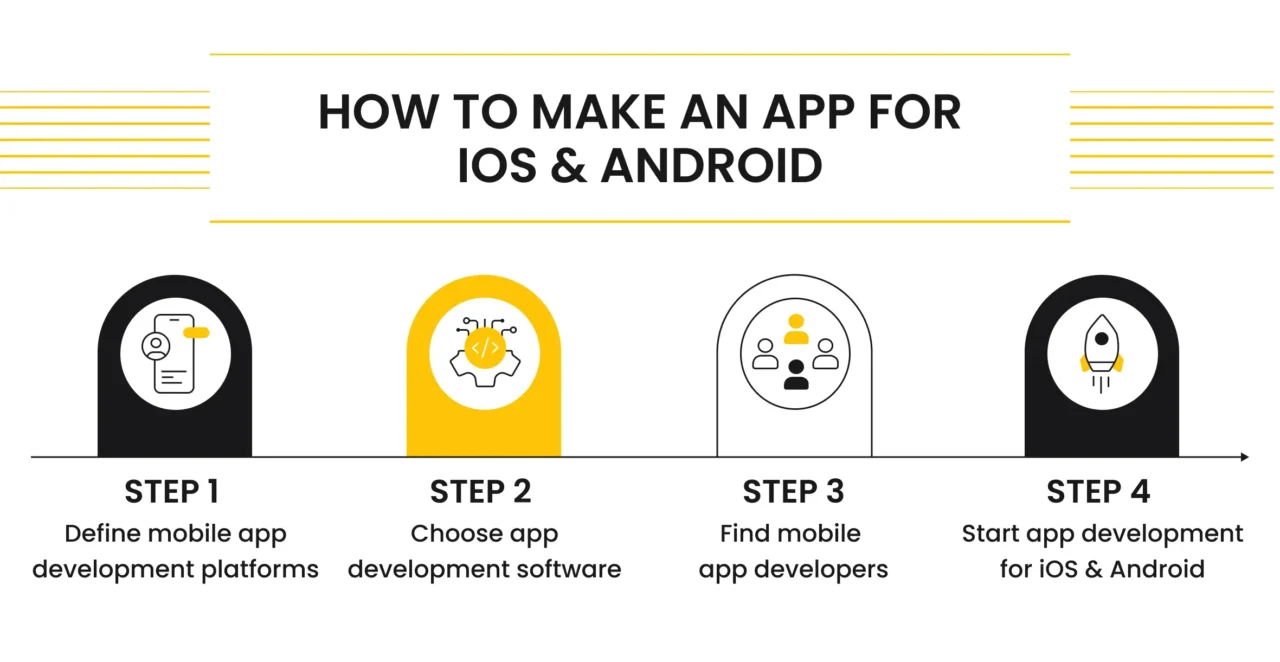
Introduction to iOS and Android Apps
Mobile technology has transformed how people communicate, shop, work, learn, and access entertainment. iOS and Android apps sit at the centre of this transformation, giving businesses direct ways to connect with customers through smartphones and tablets. From simple utility tools to sophisticated financial platforms, mobile applications have become important digital products for organisations of almost every size.
Developing a successful mobile application requires more than writing code and publishing it online. Businesses need to understand their audience, define useful features, create an intuitive interface, protect user information, and test the product carefully. A thoughtful approach to mobile app development can create a smoother customer experience while helping a brand build stronger engagement and long-term digital growth.
Understanding the Difference Between iOS and Android Apps
The most important difference between iOS and Android is the ecosystem in which each platform operates. iOS is developed by Apple and is primarily used on devices such as the iPhone and iPad. Android, developed by Google and supported by many manufacturers, operates across a much wider range of smartphones and tablets with different specifications.
These differences influence the way applications are designed and developed. iOS development generally focuses on a more controlled hardware and software environment, while Android development must accommodate numerous screen sizes, manufacturers, and device capabilities. Businesses therefore need to consider their target audience, preferred features, development budget, and geographical market before selecting one platform or supporting both.
Planning a Mobile App Before Development
A successful application begins with a clear purpose. Before development starts, businesses should identify the problem the app will solve, understand the intended audience, and research competing products. Defining these elements helps developers and designers establish priorities instead of filling the application with unnecessary features that may increase costs without improving the user experience.
Planning should also include a development roadmap covering design, technology, testing, launch, and future updates. Businesses can decide whether they need native development or a cross-platform approach based on their requirements. Establishing a realistic budget and timeline at the beginning can reduce delays and make the entire development process more manageable.
Designing User-Friendly Mobile Apps
Good mobile design should feel natural rather than complicated. Users should be able to understand navigation, buttons, menus, and important functions without extensive instructions. Clean layouts, readable typography, appropriate spacing, and consistent visual elements can make an application easier to use. A well-designed interface also helps businesses create a professional digital identity.
Designers should remember that Apple and Google provide different interface guidelines. Although a product can maintain consistent branding across platforms, certain navigation patterns and interaction behaviours may need to change. Accessibility is equally important, allowing people with different abilities to interact comfortably with the application. User testing during the design stage can reveal problems before development becomes expensive.
iOS App Development

iOS development is closely connected to Apple’s software and hardware ecosystem. Developers commonly use Swift and Apple’s development tools to create applications for iPhone and iPad. Because Apple controls its supported devices and operating-system environment more tightly, developers can often work with a more predictable set of hardware configurations when optimising an application.
Before an iOS application reaches customers, it needs to pass Apple’s publishing and review requirements. Developers should therefore consider performance, privacy, security, compatibility, and user experience throughout development. Regular maintenance remains important after launch because operating-system updates can introduce new capabilities, change requirements, or affect how existing features perform.
Android App Development
Android provides businesses with access to a broad global audience because the operating system is available across devices from numerous manufacturers. Kotlin is widely used for modern Android development, while Android Studio provides an integrated environment for building and testing applications. Developers must account for different screen dimensions, hardware capabilities, operating-system versions, and manufacturer-specific behaviours.
Publishing an Android application also requires attention to Google Play requirements, security practices, performance, and compatibility. Thorough testing across representative devices can help identify problems that might not appear on a single phone. After launch, developers should monitor crashes, reviews, performance, and compatibility so that updates can keep the application reliable as the Android ecosystem evolves.
Cross-Platform iOS and Android Apps
Cross-platform development allows businesses to create applications for multiple operating systems while sharing a significant portion of their codebase. Technologies such as Flutter and React Native can help development teams build experiences for both major platforms. This approach may reduce duplicated development work and can be particularly useful for businesses that want to launch on multiple platforms efficiently.
However, cross-platform development is not automatically the best solution for every project. Applications requiring highly specialised platform features, advanced performance, or deeply integrated device capabilities may benefit from native development. Businesses should compare development speed, performance, user experience, maintenance requirements, and technical complexity before deciding which approach best fits their product.
Essential Features of Modern Mobile Apps
Modern iOS and Android apps can include a wide range of features depending on their purpose. Secure account registration, authentication, personalised profiles, search, notifications, payments, analytics, and social sharing are common examples. Applications can also use location services, offline functionality, cloud synchronisation, and personalised recommendations when these capabilities genuinely improve the user’s experience.
Security should be treated as an essential feature rather than an optional addition. Applications may handle personal information, payment details, messages, or business data, making strong authentication and appropriate data protection essential. Developers should carefully manage permissions and integrate trusted services while ensuring that users understand how their information is collected and used.
Testing and Quality Assurance
Testing is one of the most important stages of mobile app development because even a visually impressive product can fail if it contains serious technical problems. Developers should test functionality, navigation, compatibility, performance, security, and usability. Testing across different devices and operating-system versions can expose issues that may otherwise remain hidden until after launch.
Beta testing can provide valuable feedback from real users before a wider release. Their experiences can highlight confusing screens, missing features, slow loading times, or unexpected crashes. Once problems are identified, developers can resolve them before publication. Continued testing is also necessary after launch because new operating-system versions, devices, integrations, and application updates can introduce fresh technical challenges.
Launching and Marketing Mobile Apps
Publishing an application is only the beginning of its journey. Businesses need to make their product discoverable through effective App Store and Google Play optimisation. A clear application name, useful description, attractive screenshots, professional icon, relevant keywords, and accurate category can help communicate the product’s value to potential users.
Marketing can extend beyond app-store optimisation. Businesses can promote their applications through social media, websites, email campaigns, content marketing, advertising, partnerships, and existing customer networks. Positive reviews and ratings can also influence user confidence. A strong marketing strategy should explain not only what the app does but also why downloading it will make the customer’s life easier.
Cost of Developing iOS and Android Apps
The cost of creating a mobile application depends on its complexity, features, design requirements, technology, development team, integrations, and testing needs. A basic application with a few screens may require considerably fewer resources than an advanced platform involving payments, artificial intelligence, real-time communication, location services, or complex backend systems.
Businesses should also account for expenses after development. Hosting, security, technical support, updates, analytics, marketing, and ongoing maintenance can all contribute to the long-term cost of an application. A practical strategy is to launch with a strong set of essential features, gather user feedback, and gradually introduce additional functionality based on genuine customer needs.
Maintaining and Updating Mobile Apps
Mobile applications require ongoing attention after publication. Operating systems are regularly updated, devices evolve, security threats change, and user expectations continue to develop. Regular maintenance allows developers to fix bugs, improve performance, strengthen security, and maintain compatibility with newer versions of iOS and Android.
User feedback and analytics can help determine which improvements deserve priority. Developers can examine crashes, engagement, retention, and feature usage to understand how people interact with the product. Consistent updates demonstrate that a business is committed to its customers and can help keep the application useful rather than allowing it to become outdated.
Security and Privacy for Mobile Apps
Security should be incorporated into every stage of application development. Developers should protect sensitive information through appropriate encryption, secure authentication, safe data storage, and careful handling of permissions. Payment functionality and third-party integrations should receive additional attention because vulnerabilities in connected services can create risks for both businesses and customers.
Privacy is equally important for building trust. Users should understand what information an application collects, why it is collected, and how it is used. Businesses should follow applicable privacy requirements and avoid requesting unnecessary permissions. A privacy-focused approach can strengthen customer confidence while reducing the risks associated with careless data handling.
Choosing Between iOS, Android, or Both
Choosing a development platform should depend on the application’s audience and business objectives rather than simply following popularity. Businesses can examine where their potential customers live, which devices they use, how much they are willing to spend, and which platform-specific features the product requires. Market research can provide valuable evidence before development begins.
For some businesses, launching on one platform first can be a practical way to validate an idea. Others may benefit from reaching both audiences immediately. Cross-platform technology can also provide an efficient route to multiple operating systems. The ideal choice ultimately depends on budget, audience, technical requirements, expected growth, and the long-term product strategy.
Future Trends in Mobile App Development
The future of mobile applications is increasingly connected with artificial intelligence, automation, augmented reality, wearable devices, and intelligent personalisation. AI can help applications provide smarter recommendations, automate repetitive tasks, improve customer support, and analyse information more effectively. As mobile hardware becomes more capable, developers will have greater opportunities to create richer and more responsive experiences.
Privacy and security are also likely to become increasingly important. Users expect greater control over their information, while businesses need reliable protection against evolving threats. Faster networks, connected devices, and improved processing capabilities will continue expanding what mobile applications can accomplish. Businesses that combine useful innovation with simple design and responsible data practices will be better positioned for long-term success.
Conclusion
iOS and Android apps have become powerful tools for businesses seeking to reach customers through modern mobile devices. Successful development requires much more than technical implementation; it involves careful research, strategic planning, thoughtful design, reliable testing, strong security, effective marketing, and continuous improvement. Choosing the right development approach can make a significant difference to the application’s performance and commercial potential.
Whether a business chooses native development, cross-platform technology, or a phased launch, the central goal should remain the same: create a useful and enjoyable experience for the intended audience. By understanding customer needs and maintaining the product after launch, businesses can turn mobile applications into valuable digital assets that support engagement, loyalty, and sustainable growth.
Frequently Asked Questions About iOS and Android Apps
What is the difference between iOS and Android apps?
iOS apps are designed primarily for Apple’s mobile ecosystem, while Android apps operate across devices made by many manufacturers. The platforms have different development tools, design conventions, publishing processes, and hardware environments, so developers often adapt applications to suit the characteristics of each ecosystem.
Is it better to develop an iOS or Android app first?
There is no universal answer. Businesses should consider their target audience, geographical market, budget, required features, and commercial goals. Market research can help determine which platform is most appropriate for an initial launch, while later expansion can provide access to additional users.
Can one app work on both iOS and Android?
Yes. Cross-platform development frameworks can allow teams to create applications for both platforms using a shared codebase. However, some applications may still require platform-specific development when they depend heavily on specialised hardware, operating-system capabilities, or highly customised performance.
How much does it cost to develop a mobile app?
The cost varies significantly depending on the application’s complexity, number of features, design requirements, development method, integrations, testing, and maintenance. A simple application can require fewer resources, while a sophisticated platform with advanced functionality can require substantially more investment.
How long does it take to develop a mobile app?
Development time depends on the scope and complexity of the project. Planning, user-interface design, programming, backend development, testing, revisions, and store approval all contribute to the overall timeline. Clearly defined requirements can help teams manage the project more efficiently.
What programming languages are used for iOS and Android apps?
Swift is widely used for modern iOS development, while Kotlin is a major language for Android development. Cross-platform frameworks such as Flutter and React Native can also be used when developers want to share substantial portions of the application code across platforms.
Are mobile apps secure?
Mobile applications can be secure when developers follow strong security practices, but no application should be considered automatically risk-free. Secure authentication, encryption, careful permissions, safe data storage, regular updates, testing, and responsible third-party integrations all contribute to stronger application security.
How can I increase mobile app downloads?
Businesses can improve visibility through App Store Optimisation, useful descriptions, strong screenshots, relevant keywords, positive reviews, social media promotion, content marketing, advertising, and referrals. More importantly, the application should deliver genuine value so that users continue using it after installation.
Do mobile apps need regular updates?
Yes. Regular updates can fix bugs, address security issues, improve performance, support newer operating-system versions, and introduce useful features. Monitoring customer feedback and application analytics can help businesses determine which updates will provide the greatest benefit to users.
What are the benefits of developing iOS and Android apps for a business?
Mobile applications can provide direct customer engagement, convenient services, personalised experiences, stronger brand visibility, and additional opportunities for revenue. Supporting both major platforms can also help businesses reach a broader audience, provided the development strategy is aligned with their budget and objectives.