Introduction to Artificial Intelligence Governance
Artificial intelligence is rapidly changing how organisations work, make decisions, serve customers, and develop new products. As AI becomes more powerful, businesses also face greater concerns around privacy, security, fairness, accountability, and regulatory compliance. Artificial intelligence governance provides a structured approach for managing these concerns while allowing organisations to benefit from AI without overlooking its potential risks.
Effective governance is not simply about creating restrictive rules for technology. It is about building a responsible environment where AI can be developed and used with clear expectations, appropriate oversight, and measurable safeguards. From generative AI applications to machine learning systems, organisations need governance practices that support innovation while protecting customers, employees, data, and business interests.
What Is Artificial Intelligence Governance?
Artificial intelligence governance refers to the policies, processes, standards, responsibilities, and controls used to guide the development and use of AI systems. It helps organisations determine how AI should be designed, tested, deployed, monitored, and eventually retired. A strong governance structure makes accountability clearer and ensures that important AI decisions are not left without proper oversight.
AI governance is closely connected to ethics, risk management, cybersecurity, and corporate governance, but it has a broader operational role. It considers the complete AI lifecycle and brings technical and business teams together. Developers may focus on model performance, while legal, compliance, security, and leadership teams evaluate wider organisational risks and responsibilities.
Why Artificial Intelligence Governance Matters for Businesses
Businesses increasingly depend on AI for customer service, marketing, recruitment, fraud detection, forecasting, content creation, and decision support. Without suitable controls, an AI system can produce inaccurate results, expose confidential information, reinforce harmful bias, or create regulatory problems. Governance gives organisations a practical way to identify these risks before they become expensive or damaging incidents.
Strong governance can also increase confidence in AI adoption. Customers and employees are more likely to trust systems when organisations can explain how they are used and who remains accountable for important outcomes. Instead of slowing innovation, effective governance can create a safer foundation for experimentation, helping businesses adopt useful AI solutions with greater confidence.
Key Principles of Responsible AI Governance
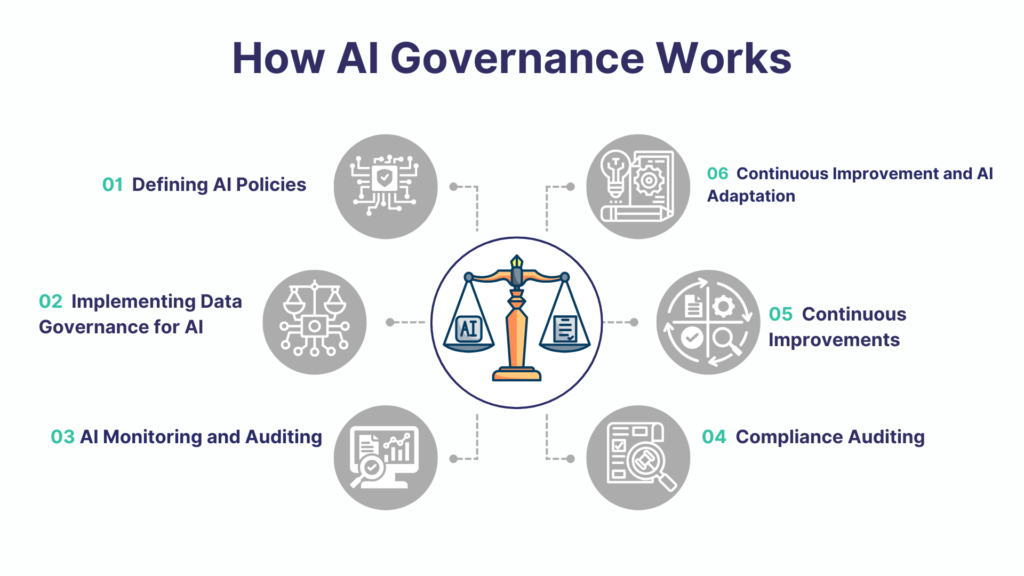
Responsible AI begins with transparency. Organisations should understand what their AI systems are designed to do, what data they depend on, and where their limitations exist. Accountability is equally important because people should have clearly defined responsibilities for developing, approving, operating, and monitoring AI systems throughout their lifecycle.
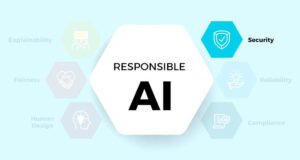
Fairness, privacy, security, reliability, and human oversight are also central principles. AI systems should be evaluated for potentially discriminatory outcomes and protected against misuse or manipulation. Sensitive information must be handled carefully, while high-impact decisions should receive appropriate human review. Explainability can further help users understand why an AI system produced a recommendation or result.
Building an Effective Artificial Intelligence Governance Framework
A practical governance framework begins with clearly defined responsibilities. Organisations may establish an AI governance committee involving technology, legal, compliance, cybersecurity, risk, and business representatives. The organisation should also maintain an inventory of AI systems so decision-makers know which tools are being used and understand their potential business impact.
Risk assessment should be built into the AI lifecycle rather than added at the end. Before deployment, organisations can assess data quality, privacy implications, security weaknesses, fairness concerns, model reliability, and regulatory requirements. Documentation, approval procedures, monitoring, incident reporting, and periodic reviews then provide ongoing visibility into how systems perform after launch.
Artificial Intelligence Governance and Regulatory Compliance
AI regulations and related legal requirements continue to develop across different markets and industries. Organisations therefore need processes for monitoring regulatory changes and understanding which requirements apply to their specific operations. Areas such as data protection, consumer rights, intellectual property, cybersecurity, and employment can all influence how AI systems should be designed and managed.
Compliance should not be treated as a one-time project. Businesses need documented controls, audit trails, risk assessments, and review processes that can adapt as technology and regulations change. By connecting governance with existing compliance programmes, organisations can create a more consistent approach to managing AI-related obligations without unnecessarily duplicating internal processes.
Managing AI Risks and Challenges
AI can introduce several categories of risk. Algorithmic bias may lead to unfair outcomes, while poor-quality training data can reduce accuracy and reliability. Privacy risks can emerge when sensitive information is entered into AI applications, and cybersecurity threats can target models, applications, APIs, or supporting infrastructure. Intellectual property and copyright issues can also create challenges for businesses.
Third-party AI tools introduce another layer of uncertainty because organisations may have limited visibility into how external models are trained, updated, or secured. Shadow AI, where employees use unapproved AI applications without organisational oversight, can create additional risks. Effective governance therefore requires clear policies, employee education, vendor assessments, monitoring, and defined procedures for reporting AI-related incidents.
Artificial Intelligence Governance for Generative AI
Generative AI has introduced new governance considerations because these systems can create text, images, audio, video, software code, and other content at remarkable speed. Organisations need clear rules about what information employees can provide to external AI platforms and how generated material should be reviewed before being shared with customers or used in business decisions.
Accuracy is another important consideration. Generative AI can produce convincing but incorrect information, making human verification essential for sensitive applications. Businesses should also consider confidentiality, copyright, data protection, misinformation, and content authenticity. A well-designed governance programme helps employees understand both the opportunities and limitations of generative AI.
The Role of AI Governance in AI Development and Deployment
Governance should begin before an AI model reaches production. During development, teams can assess data quality, establish testing requirements, document model behaviour, and evaluate potential risks. Before deployment, systems should be tested for accuracy, security, reliability, fairness, and suitability for their intended purpose. Higher-risk applications may require additional approval and independent review.
Once deployed, AI systems should continue to be monitored. Performance can change as data, users, business conditions, or models evolve. Organisations should establish processes for investigating unusual behaviour, responding to incidents, updating systems, and removing applications that no longer meet requirements. This lifecycle approach makes governance an ongoing practice rather than a single approval checkpoint.
Creating an Artificial Intelligence Governance Policy
An AI governance policy should clearly explain how an organisation expects AI to be used. It can define acceptable and prohibited applications, data-handling requirements, employee responsibilities, approval procedures, security expectations, and rules for AI-generated content. Clear policies reduce uncertainty and help employees understand when they can use AI independently and when additional approval is required.
Policies should also explain how AI incidents are reported and investigated. Employees need an accessible way to raise concerns about inaccurate outputs, privacy issues, unfair outcomes, security problems, or inappropriate use. Because AI technology changes quickly, policies should be reviewed regularly so that internal guidance remains practical, relevant, and aligned with organisational objectives.
Best Practices for Implementing AI Governance
Successful implementation starts with clear business objectives and an understanding of the organisation’s risk tolerance. Rather than applying identical controls to every AI application, businesses can use a risk-based approach. Low-risk productivity tools may require simple controls, while systems affecting financial, employment, healthcare, or other significant decisions may require stronger assessment and human oversight.
Training is another essential component. Employees should understand AI capabilities, limitations, privacy considerations, security risks, and internal policies. Organisations should also establish measurable governance metrics, maintain an up-to-date AI inventory, review third-party providers, and conduct regular audits. Continuous improvement allows governance programmes to evolve alongside new AI capabilities and emerging risks.
Artificial Intelligence Governance Tools and Technologies
Technology can support governance by improving visibility, monitoring, documentation, and risk management. Organisations can use model monitoring platforms, data governance systems, security controls, compliance solutions, audit tools, and AI observability technologies to track important information throughout the AI lifecycle.
However, technology alone cannot solve every governance challenge. Automated controls can identify certain technical issues, but human judgement remains important for ethical, legal, and business decisions. The strongest approach combines technology with clear policies, skilled teams, independent oversight, and well-defined accountability.
Measuring the Success of Artificial Intelligence Governance
Governance programmes should be measurable rather than judged only by the number of policies created. Organisations can monitor AI incidents, compliance findings, model performance, risk assessments, security events, fairness indicators, and audit outcomes. These measurements help leadership understand whether governance controls are actually reducing risks and improving the quality of AI deployment.
Businesses can also measure employee adoption of approved AI tools and participation in governance training. Customer trust, transparency, and responsible AI practices may provide additional indicators of progress. Regular reporting helps decision-makers identify weaknesses and adjust controls before problems become widespread.
The Future of Artificial Intelligence Governance
As AI systems become more capable, governance will need to evolve alongside them. AI agents and increasingly autonomous systems may perform multi-step tasks, interact with business systems, and make decisions with less direct human involvement. This could increase the importance of real-time monitoring, permission controls, automated safeguards, and clearly defined intervention mechanisms.
Future governance is also likely to place greater emphasis on AI assurance, independent assessments, continuous testing, and transparent documentation. Organisations that treat responsible AI as an ongoing strategic capability will be better positioned to respond to technological change. Governance can ultimately become more than a compliance function by helping businesses build trustworthy AI products and sustainable competitive advantages.
Conclusion: Building a Responsible AI Future
Artificial intelligence offers organisations significant opportunities, but responsible adoption requires more than powerful models and innovative applications. Artificial intelligence governance provides the structure needed to balance innovation with accountability, privacy, security, fairness, transparency, and human oversight. By establishing clear policies and continuously assessing AI systems, organisations can reduce risks while creating greater confidence in their technology.
The most effective governance programmes are flexible, practical, and continuously evolving. As AI capabilities and regulations develop, organisations should regularly review their frameworks, train employees, monitor systems, and strengthen controls where necessary. A thoughtful governance strategy can help businesses move forward with AI while maintaining the trust of customers, employees, regulators, and other stakeholders.
Frequently Asked Questions About Artificial Intelligence Governance
What is artificial intelligence governance?
Artificial intelligence governance is the collection of policies, processes, standards, roles, and controls used to manage AI responsibly. It covers areas such as risk management, transparency, privacy, security, accountability, compliance, monitoring, and human oversight throughout an AI system’s lifecycle.
Why is artificial intelligence governance important?
It helps organisations identify and manage risks associated with AI while creating a structured environment for responsible innovation. Good governance can reduce privacy, security, compliance, fairness, and operational risks while increasing trust in AI applications.
What are the main principles of AI governance?
Key principles include transparency, accountability, fairness, privacy, security, reliability, explainability, human oversight, and responsible risk management. Organisations can adapt these principles according to their industry, applications, regulatory environment, and risk profile.
What should an AI governance framework include?
A framework should generally include AI policies, defined responsibilities, risk assessments, an AI system inventory, documentation requirements, approval processes, monitoring procedures, incident management, employee training, and regular audits or reviews.
How does AI governance reduce business risks?
It creates processes for identifying potential problems before and after AI deployment. By combining risk assessments, testing, monitoring, human oversight, documentation, and clear accountability, organisations can respond to AI-related risks more consistently.
What is the difference between AI governance and AI ethics?
AI ethics focuses largely on principles such as fairness, accountability, transparency, and responsible treatment of people. AI governance is broader, turning these principles into practical policies, controls, responsibilities, monitoring systems, and organisational processes.
How can a company implement artificial intelligence governance?
A company can begin by identifying its AI use cases, assigning ownership, creating an AI inventory, assessing risks, establishing policies, training employees, and introducing monitoring and review processes. Governance should then be continuously improved as AI usage expands.
Does AI governance apply to generative AI?
Yes. Generative AI requires governance covering areas such as confidential data, privacy, copyright, accuracy, security, employee usage, content review, and human oversight. Organisations should establish clear rules for approved tools and appropriate business use.
Who is responsible for AI governance?
Responsibility is usually shared across leadership, technology, legal, compliance, cybersecurity, risk, data, and business teams. Employees who use AI also have responsibilities under organisational policies. Clear ownership is essential so that important governance tasks are not overlooked.
What are the biggest challenges in artificial intelligence governance?
Common challenges include rapidly changing AI technology, evolving regulations, limited internal expertise, data quality problems, algorithmic bias, cybersecurity threats, third-party AI dependencies, employee use of unapproved tools, and the difficulty of balancing innovation with effective risk controls.