Introduction to Cybernetic systems
Technology is increasingly moving towards machines that can sense, analyse and respond to changing conditions. Cybernetic systems are central to this development because they use feedback, communication and control to regulate processes. From industrial machinery and robotics to healthcare and smart infrastructure, these systems help technology respond intelligently rather than simply follow fixed instructions.
The concept of cybernetics has influenced many areas of modern engineering and computing. Today, advances in artificial intelligence, sensors, connected devices and automation are making feedback-based technologies more capable. Understanding how cybernetic systems work provides useful insight into the development of intelligent machines and the increasingly connected environments in which people live and work.
What Are Cybernetic systems?
Cybernetic systems are systems designed to monitor conditions, process information and adjust their behaviour using feedback. A basic example is a thermostat that measures temperature and activates heating or cooling when necessary. More sophisticated systems can process thousands of inputs and make continuous adjustments to maintain performance, stability or a desired outcome.
The principles behind cybernetics can be found in both natural and technological systems. Biological organisms constantly receive information and respond to changes in their surroundings. Engineers have applied similar ideas to machines, creating systems that can observe their environment and modify their actions. This connection between information, feedback and control is at the heart of cybernetic technology.
How Cybernetic systems Work
A typical feedback system begins with sensors that gather information about a machine, process or environment. That information is sent to a controller, which compares the current condition with a desired target. If there is a difference, the controller determines an appropriate response and sends instructions to another component capable of changing the system’s behaviour.
This process can happen continuously and extremely quickly. Negative feedback helps maintain stability by correcting deviations from a target, while positive feedback can reinforce particular changes in suitable applications. Modern control systems can combine sensors, processors, software and actuators to create responsive technology that adjusts automatically as conditions change.
Key Technologies Behind Cybernetic systems
Sensors are among the most important technologies used in cybernetic applications because they provide information about the physical world. Temperature, pressure, motion, position, distance, light and force can all be measured using different sensing technologies. Controllers then interpret this information and determine whether the system needs to maintain its current state or make an adjustment.
Artificial intelligence, embedded computing, robotics and the Internet of Things are expanding these capabilities. Connected devices can exchange information, while edge computing allows data to be processed closer to where it is generated. Machine learning can also identify patterns in data, enabling more advanced systems to make predictions and adapt their behaviour based on previous experiences.
Applications of Cybernetic systems Across Industries
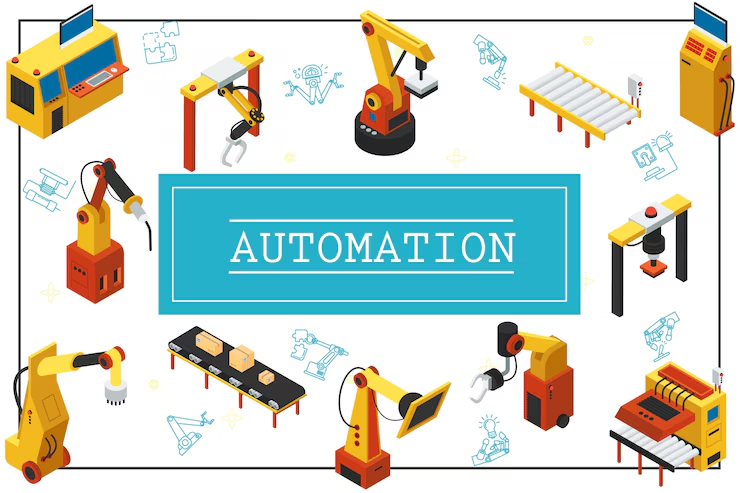
Manufacturing is a major area where feedback and control technologies are widely used. Automated production equipment can monitor speed, temperature, pressure and positioning before making adjustments. This can improve consistency and reduce errors. Cybernetic principles are also used in robotic machinery, where sensors help machines understand movement and respond to changing conditions during industrial tasks.
Other applications include healthcare, agriculture, transportation, energy and smart infrastructure. Medical devices can monitor physiological conditions, while precision farming equipment can respond to soil and crop information. Smart grids can balance energy demand, and intelligent buildings can adjust lighting or climate controls. These examples show how feedback can help different industries operate more efficiently and responsively.
Cybernetic systems and Artificial Intelligence
Artificial intelligence is adding new capabilities to feedback-based technologies. Traditional control systems often operate according to predefined rules, whereas AI-enabled systems can analyse large datasets and recognise patterns that may not be obvious to human operators. This can allow machines to make more sophisticated predictions and adapt their behaviour to changing circumstances.
Machine learning can be particularly useful when systems encounter complex environments. For example, an autonomous machine may use cameras and other sensors to understand its surroundings before selecting an appropriate action. Combining AI with cybernetic principles can therefore create technology that is not only responsive but also increasingly capable of learning, predicting and adapting.
Cybernetic systems and Robotics
Robotics provides one of the clearest examples of cybernetic principles in practice. A robot can use sensors to determine its position, detect objects and measure physical forces. Its controller processes that information before instructing motors and actuators to perform specific movements. Feedback then allows the robot to check whether the intended movement has occurred correctly.
This approach is important for autonomous and collaborative robots. A machine working around people may need to detect unexpected movement and immediately change its behaviour. Similarly, mobile robots require continuous feedback for navigation and obstacle avoidance. As robotic technology develops, cybernetic control is helping machines become more responsive, adaptable and capable of operating in unpredictable environments.
Benefits of Cybernetic systems
One major advantage of feedback-based technology is improved operational efficiency. A system can continuously monitor its performance and make adjustments without requiring constant human intervention. This can help reduce waste, maintain consistent output and respond quickly when operating conditions change. Automated control can also reduce the workload associated with repetitive monitoring and adjustment.
Cybernetic approaches can also improve precision and safety. Machines can react to sensor information much faster than a person in certain situations, which is valuable in hazardous or high-speed environments. Adaptive control can also support better resource management by adjusting energy consumption, production settings or other operational variables according to real-time requirements.
Challenges and Limitations of Cybernetic systems
Despite their advantages, cybernetic technologies can be complex to design and maintain. A system may depend on numerous sensors, communication channels, controllers and software components. If one important component provides inaccurate information, the resulting feedback may lead to an incorrect response. Engineers therefore need to carefully validate hardware, software and control strategies before deployment.
Cybersecurity is another significant concern, particularly when connected systems control physical equipment. A compromised device could potentially affect industrial processes or other critical operations. Data privacy, system reliability and ethical questions surrounding autonomous decisions also require attention. Strong security measures, human oversight, testing and maintenance are therefore essential when implementing advanced cybernetic technologies.
Cybernetic systems in Smart Technology and Industry
Smart manufacturing is closely connected with cybernetic principles because modern factories increasingly depend on machines that can monitor and adjust their own operations. Connected sensors can provide real-time information about equipment, while analytics platforms can identify inefficiencies or potential maintenance requirements. Automated systems can then respond to changing production conditions with limited human intervention.
Similar ideas are appearing in homes, offices and cities. Smart buildings can automatically adjust heating, cooling and lighting based on occupancy and environmental conditions. Connected infrastructure can monitor traffic, energy use and equipment performance. These applications demonstrate how feedback can transform ordinary technology into systems that continuously observe conditions and respond to changing requirements.
Future Trends in Cybernetic systems
The future of cybernetic technology is likely to involve deeper integration with artificial intelligence and autonomous decision-making. Machines may increasingly analyse information from multiple sources before selecting actions without direct human instructions. Advances in sensors, processors and communication networks will support faster responses and more detailed environmental awareness.
Bio-inspired engineering and human-machine interfaces could also influence future development. Researchers are exploring technologies that imitate biological processes, while advanced interfaces may allow people to interact with machines more naturally. As connected devices become more capable, cybernetic technology could contribute to autonomous transportation, smart cities, intelligent robotics and adaptive industrial environments.
Ethical, Security and Human Considerations
As machines become more autonomous, human oversight remains important. A system that can make decisions based on sensor information and algorithms may encounter situations that were not anticipated during development. Clear operating limits, safety mechanisms and human intervention procedures can help reduce potential risks. Responsible design should therefore remain a central consideration alongside technical performance.
Privacy and cybersecurity are equally important because many intelligent systems collect continuous information. Connected cameras, sensors and monitoring devices can generate valuable data but may also create privacy concerns. Organisations should protect sensitive information and clearly define how data is collected and used. Responsible governance can help ensure that technological progress supports people without creating unnecessary risks.
Conclusion: The Future of Cybernetic systems
Cybernetic systems have become an important foundation for modern automation, robotics and intelligent technology. Their core principles of feedback, communication and control allow machines to monitor conditions and respond to changes. With the help of sensors, embedded computing, artificial intelligence and connected devices, these systems can now perform increasingly sophisticated tasks across many industries.
Future development will likely make cybernetic technology more adaptive, autonomous and interconnected. AI-powered control, advanced robotics, edge computing and intelligent infrastructure could create systems that respond to their environments with greater speed and accuracy. However, successful adoption will require careful attention to reliability, cybersecurity, privacy and human oversight as intelligent technologies become increasingly integrated into everyday life.
Frequently Asked Questions About Cybernetic systems
What are Cybernetic systems?
Cybernetic systems are technologies that use feedback, communication and control to monitor conditions and adjust their behaviour. They can range from simple automated devices to complex robotic and industrial systems that process large amounts of information in real time.
How do Cybernetic systems work?
They generally work through a feedback loop. Sensors collect information, a controller processes that information, and actuators or other mechanisms respond to the controller’s instructions. The system then receives new feedback and can make further adjustments as conditions change.
What are the main components of Cybernetic systems?
Common components include sensors, controllers, processors, communication technologies and actuators. Advanced systems may also include artificial intelligence, machine learning, robotics, Internet of Things devices and edge-computing technologies for faster data processing.
Where are Cybernetic systems used?
They are used across manufacturing, robotics, healthcare, agriculture, transportation, energy, smart buildings and infrastructure. Their ability to monitor and respond to changing conditions makes them useful wherever continuous control, automation or adaptation is required.
What is the relationship between cybernetics and artificial intelligence?
Cybernetics focuses strongly on feedback, communication and control, while artificial intelligence provides methods for learning, prediction and decision-making. Combining the two can create systems that respond to changing environments and make increasingly sophisticated decisions based on available data.
What are the benefits of Cybernetic systems?
Major benefits include improved efficiency, precision, automation, adaptability and real-time control. These technologies can also reduce repetitive human work, improve safety in certain environments and help organisations optimise energy, materials and other resources.
What are the challenges of Cybernetic systems?
Key challenges include technical complexity, implementation costs, unreliable sensor data, cybersecurity risks, maintenance requirements and ethical concerns. Connected systems also need strong protection against unauthorised access and should include appropriate human oversight.
Are Cybernetic systems used in robotics?
Yes. Robotics relies heavily on feedback to control movement, positioning, navigation and interaction with objects. Sensors provide information about the robot and its surroundings, allowing controllers to adjust motors and other mechanisms in real time.
What is the future of Cybernetic systems?
Future developments are expected to include greater AI integration, autonomous machines, advanced robotics, smart infrastructure, connected devices and adaptive control. These technologies could make machines more responsive and capable while increasing the importance of responsible design, security and human supervision.