Introduction to AI Compliance Policies
Artificial intelligence is becoming an important part of modern business, supporting customer service, marketing, recruitment, analytics, software development, and decision-making. As organisations adopt these technologies, they also face questions about privacy, security, fairness, intellectual property, and regulatory responsibilities. AI compliance policies provide a structured approach for managing these concerns while allowing businesses to benefit from AI responsibly.
A strong compliance policy does more than establish restrictions. It gives employees practical guidance about acceptable AI use, sensitive information, approved tools, risk management, and reporting procedures. When implemented effectively, AI compliance policies can create greater clarity across an organisation and help teams innovate with confidence while maintaining appropriate legal, ethical, and operational safeguards.
What Are AI Compliance Policies?
AI compliance policies are formal rules and procedures that guide how an organisation develops, purchases, deploys, and uses artificial intelligence. They can define acceptable and prohibited uses, establish responsibilities, protect sensitive information, and create processes for assessing AI-related risks before systems are introduced into business operations.
These policies can apply to internally developed models as well as external platforms and third-party AI services. Their exact requirements depend on factors such as industry, location, organisation size, and the potential impact of each AI application. A customer-service assistant, for example, may require different controls from an AI system involved in employment or financial decisions.
Why AI Compliance Policies Matter for Businesses
AI can improve productivity and create new opportunities, but uncontrolled use can introduce significant risks. Employees may accidentally share confidential information with external tools, while poorly tested systems can generate inaccurate or discriminatory results. Organisations may also face concerns related to privacy, copyright, cybersecurity, consumer protection, and changing regulatory requirements.
Clear policies help turn complex responsibilities into practical expectations. Employees know which tools are approved, what information can be entered into AI systems, and when human review is required. Leadership also gains a framework for managing risks consistently. This combination can improve trust, reduce uncertainty, and support responsible AI adoption across different departments.
Key Elements of Effective AI Compliance Policies
An effective policy should clearly define its scope and explain which AI systems, employees, contractors, and business activities it covers. It should establish acceptable uses and identify activities that require additional approval or are prohibited. Clear definitions are particularly valuable because employees may interpret general AI guidance differently without specific examples.
Data protection, cybersecurity, accountability, transparency, and human oversight should also be addressed. The policy can establish requirements for risk assessments, documentation, monitoring, incident reporting, and audits. Higher-risk applications may require stronger controls, additional testing, or senior approval. Regular reviews are important because AI technology, business processes, and regulatory expectations can change rapidly.
AI Compliance and Regulatory Requirements
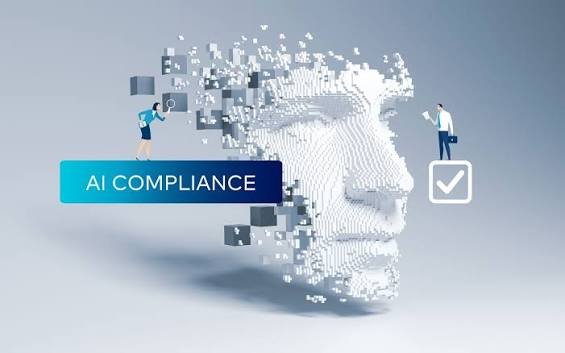
AI regulation is developing across different jurisdictions, and organisations may need to consider several areas of law when deploying AI. Requirements can involve data protection, consumer rights, employment practices, intellectual property, cybersecurity, transparency, and sector-specific obligations. Businesses operating across multiple markets may face different requirements depending on where their systems and customers are located.
Compliance should therefore be treated as an ongoing responsibility rather than a one-time project. Organisations can monitor relevant regulatory developments, document their AI use cases, conduct appropriate assessments, and maintain evidence of important compliance activities. Integrating these practices with existing legal and risk-management processes can make AI compliance more consistent and easier to maintain.
AI Risk Assessment and Compliance
Risk assessment helps organisations understand what could go wrong before an AI system is deployed. Potential risks may involve inaccurate predictions, unfair outcomes, privacy violations, security weaknesses, financial losses, regulatory breaches, or reputational damage. The severity of each risk can depend on the system’s purpose and the people who may be affected by its outputs.
A risk-based approach allows organisations to apply proportionate controls. Low-risk productivity applications may need straightforward safeguards, while high-impact systems may require extensive testing, independent review, human approval, and continuous monitoring. Documenting identified risks and mitigation measures also creates an audit trail that can help organisations demonstrate responsible decision-making.
Data Privacy and AI Compliance
Data privacy is one of the most important areas covered by AI compliance. AI systems may process personal, confidential, proprietary, or commercially sensitive information. Employees need clear guidance about what information can be entered into AI platforms, particularly when using external services that may process information outside the organisation’s direct control.
Effective policies should address data collection, access, storage, retention, processing, and sharing. Organisations should also consider data minimisation and appropriate security controls. Strong data governance can reduce the possibility of accidental disclosure while improving accountability. Regular training is essential because employees are often the first line of defence against inappropriate AI data usage.
AI Security and Compliance Requirements
AI applications introduce cybersecurity considerations that traditional software controls may not fully address. Threats can include unauthorised access, sensitive information leakage, malicious prompts, model manipulation, insecure integrations, and inappropriate use of AI capabilities. Organisations should evaluate these risks during development, procurement, deployment, and ongoing operation.
Security requirements can include access controls, authentication, monitoring, testing, incident response, and appropriate protection of data. Third-party providers should also undergo suitable security assessments. Organisations need to understand how external AI services handle information and what protections are available. Combining security controls with clear employee guidance can significantly reduce avoidable AI-related incidents.
AI Compliance Policies for Generative AI
Generative AI has made compliance more challenging because employees can create text, images, code, audio, and other content quickly. These systems can also produce inaccurate information, biased material, copyrighted content, or confidential information if used improperly. Organisations therefore need specific rules for approved generative AI tools and appropriate business use.
Policies should explain what employees can enter into generative AI systems and when generated content must be reviewed. Human verification is especially important for customer-facing communications, sensitive analysis, and important business decisions. Organisations should also consider intellectual property, attribution, misinformation, privacy, and security when defining their generative AI compliance requirements.
AI Compliance Policies for Employees
Employees play a central role in turning compliance rules into everyday behaviour. A policy should clearly explain which AI applications are approved and what activities require permission. Employees should understand that convenience does not override data protection, security, confidentiality, or accuracy requirements when using AI tools.
Training should cover practical scenarios rather than relying only on lengthy policy documents. Staff can learn how to identify sensitive information, verify AI-generated outputs, recognise potential bias, report incidents, and select approved tools. Regular education is particularly valuable as new AI applications appear, helping employees make responsible decisions without needing to understand every technical detail.
Third-Party AI Vendors and Compliance
External AI vendors can introduce risks that organisations may not be able to control directly. Before adopting a third-party AI service, businesses should consider how the provider handles data, protects systems, trains models, manages information, and responds to security incidents. Vendor due diligence can help identify potential issues before sensitive business processes depend on an external platform.
Contracts should clearly establish relevant responsibilities and expectations. Organisations should also monitor significant vendor changes, including updates to models, privacy practices, security arrangements, or terms of service. A third-party provider should not automatically be considered compliant simply because it is widely used. Businesses remain responsible for understanding how external AI services fit into their own risk environment.
Creating an AI Compliance Policy
Creating a policy begins with understanding the organisation’s current AI landscape. Businesses can identify the tools and systems already in use, determine who owns them, classify their risks, and identify gaps in existing governance. This initial assessment helps ensure that the policy reflects real-world AI usage rather than theoretical scenarios.
The next step is to define acceptable use, prohibited activities, data requirements, approval procedures, responsibilities, monitoring, and incident management. The policy should be written in clear language that employees can actually follow. After implementation, organisations should collect feedback and review the policy regularly to ensure that it remains practical as AI technology and business needs evolve.
Implementing AI Compliance Policies Across an Organisation
Successful implementation requires more than publishing a document on an internal website. Leadership should communicate why compliance matters and demonstrate that responsible AI is an organisational priority. Relevant teams, including legal, security, technology, privacy, risk, and business functions, should understand their responsibilities and collaborate on important AI decisions.
Organisations can also maintain a central inventory of AI applications and vendors. Regular assessments, employee training, monitoring, and audits can reveal whether policies are being followed. Automated tools may support some compliance activities, but human oversight remains important for interpreting risks and deciding how the organisation should respond to complex situations.
Monitoring, Auditing, and Enforcement
AI compliance continues after a policy has been introduced. Organisations should monitor AI usage, review system performance, track incidents, and assess whether controls remain effective. Regular audits can identify gaps in documentation, security, privacy, employee behaviour, or vendor management before these weaknesses become more serious problems.
When violations occur, organisations need clear investigation and escalation procedures. Corrective actions should be proportionate and consistently applied. The goal of enforcement should not simply be punishment. It should also help identify why a violation occurred and whether additional training, clearer guidance, improved controls, or policy changes could prevent similar problems in the future.
Common AI Compliance Challenges
One of the biggest challenges is the speed of AI development. New models and tools can appear faster than organisations can update internal policies. Regulatory requirements may also evolve, creating uncertainty about how specific AI applications should be governed. Limited internal expertise can make these challenges more difficult for smaller organisations.
Shadow AI is another significant concern. Employees may use unapproved AI tools because they appear convenient or productive. Third-party vendors, cross-border data processing, and unclear accountability can add further complexity. Organisations can address these challenges through practical policies, approved tool lists, employee education, vendor assessments, and risk-based governance rather than relying solely on restrictions.
Best Practices for AI Compliance
A strong approach begins with clear ownership and a risk-based strategy. Organisations should maintain an accurate inventory of AI applications, identify higher-risk systems, and integrate compliance with existing privacy, cybersecurity, legal, and risk-management programmes. Policies should be easy to understand and supported by practical examples that reflect everyday employee activities.
Regular training, audits, risk assessments, and policy reviews are equally important. Businesses should document significant AI decisions and create clear channels for reporting concerns. Monitoring regulatory developments can help organisations adapt before new requirements become urgent. The best compliance programmes remain flexible enough to support innovation while maintaining meaningful safeguards.
Measuring the Effectiveness of AI Compliance Policies
Organisations need measurable indicators to determine whether their compliance programme is working. Useful measures can include AI-related incidents, policy violations, audit findings, completed risk assessments, employee training rates, approved-tool adoption, and security or privacy events. These indicators can help leadership identify areas where additional controls or education may be necessary.
Metrics should support improvement rather than become a box-ticking exercise. For example, a high training completion rate does not necessarily mean employees understand responsible AI usage. Combining quantitative measures with employee feedback, audit findings, and real-world incident analysis can provide a more accurate picture of compliance maturity.
The Future of AI Compliance Policies
AI compliance will continue to evolve as organisations adopt more capable models, autonomous agents, and AI-powered workflows. Future compliance systems may use continuous monitoring, automated risk detection, real-time controls, and AI assurance tools to identify potential issues faster. This could make compliance more responsive as AI systems become increasingly integrated into business operations.
Regulatory expectations and industry standards are also likely to influence how organisations manage AI. Flexible policies will become increasingly valuable because businesses cannot predict every future technology or use case. Organisations that establish strong compliance foundations today can adapt more efficiently while maintaining trust and reducing disruption as AI capabilities continue to advance.
Conclusion: Building a Strong AI Compliance Culture
AI compliance policies provide organisations with a practical foundation for managing the opportunities and risks associated with artificial intelligence. Effective policies address privacy, security, fairness, transparency, accountability, data handling, employee behaviour, vendor relationships, and regulatory requirements. They help transform responsible AI from an abstract principle into clear expectations that teams can follow.
However, compliance is not achieved simply by writing a policy. Organisations need ongoing training, monitoring, audits, risk assessments, enforcement, and regular updates. By building a culture where responsible AI is part of everyday decision-making, businesses can encourage innovation while protecting their data, customers, employees, reputation, and long-term interests.
Frequently Asked Questions About AI Compliance Policies
What are AI compliance policies?
AI compliance policies are organisational rules that establish how artificial intelligence should be developed, purchased, deployed, and used. They can cover data privacy, security, acceptable use, risk management, employee responsibilities, monitoring, and regulatory compliance.
Why are AI compliance policies important?
They help organisations manage legal, privacy, security, ethical, and operational risks associated with AI. Clear policies also give employees practical guidance and help businesses demonstrate that AI is being managed responsibly.
What should an AI compliance policy include?
A policy should generally address acceptable and prohibited AI use, data protection, cybersecurity, accountability, risk assessments, human oversight, employee responsibilities, vendor management, monitoring, incident reporting, and regular policy reviews.
How can a company create an AI compliance policy?
A company can begin by identifying its AI systems and use cases, assessing risks, understanding applicable requirements, assigning ownership, defining acceptable use, creating controls, training employees, and establishing monitoring and review procedures.
Do AI compliance policies apply to generative AI?
Yes. Organisations should establish specific requirements for generative AI covering sensitive information, privacy, copyright, accuracy, security, approved tools, human review, and the verification of AI-generated content.
Who is responsible for AI compliance?
Responsibility is normally shared between leadership, legal and compliance teams, technology professionals, cybersecurity specialists, data teams, risk functions, and employees. Clearly defined ownership helps prevent important compliance responsibilities from being overlooked.
How do AI compliance policies protect company data?
They can restrict the information employees are permitted to enter into AI tools, define approved platforms, establish access controls, set data-handling requirements, and provide training on privacy and confidentiality.
How often should AI compliance policies be updated?
Policies should be reviewed regularly and whenever significant changes occur in AI technology, regulations, business operations, security risks, or the organisation’s AI usage. Regular reviews help keep policies relevant and practical.
What are the biggest AI compliance challenges?
Common challenges include rapidly changing technology, evolving regulations, shadow AI, third-party vendors, data privacy concerns, limited expertise, cross-border data processing, and balancing compliance requirements with employee productivity and innovation.
How can organisations enforce AI compliance policies?
Effective enforcement combines employee education, monitoring, audits, reporting channels, documented procedures, investigations, corrective actions, and consistent application of rules. Organisations should also use incidents as opportunities to improve their policies and controls.
What is the future of AI compliance?
The future will likely involve more automated monitoring, continuous risk assessment, AI assurance, stronger controls for autonomous AI agents, evolving regulations, and adaptive governance. Organisations will need policies that can change as quickly as AI technology itself.