Understanding Current Tech Movements
Technology is changing faster than ever, influencing how people work, communicate, shop, learn and access services. From artificial intelligence to connected devices, new innovations are transforming both everyday experiences and business operations. Understanding current tech movements helps individuals and organisations recognise important developments and prepare for a digital future shaped by rapid innovation.
The technology landscape is no longer driven by one breakthrough alone. Instead, several developments are advancing together, creating powerful connections between artificial intelligence, automation, cloud computing, cybersecurity, robotics and digital networks. These current tech movements are creating new opportunities while also introducing challenges that businesses, governments and consumers must understand.
Artificial Intelligence and Generative AI Are Reshaping Technology
Artificial intelligence has become one of the most influential forces in modern technology. AI systems can analyse information, recognise patterns, generate content and support complex tasks at remarkable speed. Businesses are increasingly using AI for customer service, marketing, software development, data analysis and decision-making, making intelligent technology an important part of digital transformation.
Generative AI is expanding this influence by allowing users to create written content, images, audio, video and computer code from simple instructions. Its rapid development is changing creative and professional workflows while encouraging companies to reconsider how people and machines can work together. As adoption increases, responsible use, accuracy, transparency and human oversight will remain essential.
Automation and Intelligent Workflows Are Changing Businesses
Automation is moving beyond simple repetitive processes and becoming increasingly intelligent. Modern systems can analyse information, trigger actions and support business workflows with limited human intervention. Organisations can use automation to reduce administrative workloads, improve consistency and allow employees to concentrate on activities requiring creativity, judgement and communication.
The impact of automation does not necessarily mean that every traditional role will disappear. Instead, many jobs are likely to evolve as routine tasks become automated and new responsibilities emerge. Employees may need stronger digital, analytical and creative skills to work effectively alongside intelligent systems. This shift makes continuous learning increasingly valuable across almost every industry.
Cloud Computing and Edge Technology Continue to Expand

Cloud computing remains an essential foundation for modern digital services. It allows organisations to access computing power, software and data storage without maintaining all the required infrastructure themselves. Flexible cloud platforms can help businesses scale their operations, support remote teams and launch digital services more efficiently.
Edge computing adds another important layer by processing data closer to where it is generated. This can be particularly useful for connected devices, industrial systems and applications requiring rapid responses. The combination of cloud and edge technology can create a more flexible digital infrastructure, supporting everything from smart devices to real-time business applications.
Cybersecurity Is Becoming a Major Technology Priority
As organisations become increasingly dependent on digital systems, cybersecurity has become a fundamental technology priority. Businesses now need to protect cloud platforms, customer information, connected devices and internal systems from increasingly sophisticated threats. Strong security practices can help organisations reduce risks while maintaining customer confidence in an increasingly connected economy.
Artificial intelligence is also influencing cybersecurity by helping systems identify unusual behaviour and potential threats more quickly. At the same time, attackers can use advanced technology to develop more sophisticated methods. This creates a continuing technological race in which organisations need effective security strategies, employee awareness, identity controls and regular assessments of their digital infrastructure.
Internet of Things and Connected Technology Are Expanding
The Internet of Things allows physical devices to connect, communicate and exchange information through digital networks. Smart appliances, wearable devices, industrial sensors and connected vehicles are examples of how physical objects can become part of larger digital ecosystems. These technologies can collect valuable information and support more responsive services.
IoT is particularly important when combined with artificial intelligence and edge computing. Sensors can gather information, edge systems can process it rapidly and AI can identify useful patterns within the data. However, greater connectivity also creates concerns surrounding privacy, security and data management. Responsible implementation will therefore be crucial as connected technology continues to expand.
Robotics and Autonomous Technology Are Moving Forward
Robotics is becoming increasingly capable as improvements in artificial intelligence, sensors and computer vision allow machines to perform more complex tasks. Industrial robots already support manufacturing and logistics, while newer systems are being developed for healthcare, warehouses, agriculture and other environments. These applications can improve precision, productivity and safety in suitable situations.
Autonomous technology is another important area of development. Vehicles, machines and software systems can increasingly respond to changing environments without continuous human control. Although significant technical and regulatory challenges remain, the combination of robotics and AI could transform industries that depend heavily on physical labour, transportation and repetitive processes.
Sustainable Technology Is Becoming More Important
Technology is also playing an important role in efforts to improve environmental sustainability. Innovations in renewable energy, battery storage, electric vehicles, energy-efficient computing and smart energy management are helping organisations explore ways to reduce resource consumption. Technology can provide better monitoring and optimisation, allowing energy systems to operate more efficiently.
At the same time, the technology industry must consider its own environmental footprint. Data centres, electronic devices and manufacturing processes require significant resources and energy. Sustainable design, efficient infrastructure and responsible electronic waste management are therefore becoming increasingly important. Future innovation is likely to focus not only on performance but also on environmental responsibility.
Advanced Connectivity and Digital Networks
Reliable connectivity is essential for many of the technologies shaping the modern digital economy. Faster wireless networks can support connected devices, real-time applications, remote services and increasingly sophisticated digital experiences. The continued development of advanced networks could strengthen the infrastructure required for smart cities, autonomous systems and large-scale IoT deployments.
The relationship between connectivity and other technologies is particularly important. AI-powered devices need networks to exchange information, while autonomous systems may require rapid communication with surrounding infrastructure. As networks continue to develop, businesses and consumers could gain access to faster, more responsive digital services across a wider range of environments.
Immersive Technology and Spatial Computing
Augmented reality, virtual reality and mixed reality are creating new ways for people to interact with digital information. Instead of viewing technology only through traditional screens, users can increasingly experience digital objects within physical or virtual environments. These technologies have potential applications in entertainment, education, training, healthcare, retail and professional collaboration.
Spatial computing builds upon these ideas by connecting digital information with physical space. As hardware and software improve, immersive technology could become more useful for practical tasks rather than remaining primarily associated with entertainment. Adoption will depend on factors such as affordability, comfort, useful applications and whether these technologies provide clear benefits over existing digital tools.
Quantum Computing and Emerging Technologies to Watch
Quantum computing represents a different approach to processing certain complex problems. Although the technology remains at an earlier stage than conventional computing, researchers and organisations are exploring its potential for scientific research, optimisation, cryptography and other demanding applications. Its long-term impact could be significant if practical and scalable systems continue to develop.
Other emerging areas are also worth monitoring, including advanced semiconductors, digital twins, neuromorphic computing and the convergence of biotechnology with digital technologies. Some of these innovations may take years to become widely adopted. Nevertheless, they demonstrate how the technology sector continues to explore entirely new approaches to solving difficult problems.
How Current Tech Movements Are Changing Everyday Life
The effects of technological innovation are visible far beyond laboratories and large technology companies. People increasingly use intelligent digital services for communication, entertainment, shopping, banking, education and travel. Smart devices can automate everyday tasks, while personalised software can provide recommendations and services based on individual preferences and behaviour.
These developments can make everyday activities faster and more convenient, but they also create important questions about privacy and digital dependence. Consumers need to understand how their information is collected, stored and used. As current tech movements become increasingly embedded in daily life, digital awareness will become just as important as technological convenience.
Challenges and Risks Behind Rapid Technology Innovation
Rapid innovation brings opportunities, but it also introduces risks that cannot be ignored. Data privacy, cybersecurity, misinformation, AI bias, employment disruption and digital inequality are among the major concerns surrounding modern technology. New systems can provide powerful benefits, yet their consequences depend heavily on how they are designed, implemented and governed.
Responsible innovation therefore requires more than technical progress. Businesses and technology developers need to consider security, accessibility, transparency and ethical consequences. Governments and regulators also have an important role in establishing appropriate frameworks. A balanced approach can help society benefit from innovation while reducing unnecessary risks and protecting people from potential harm.
What the Future of Technology Could Look Like
One of the most important current tech movements is the convergence of different technologies. AI can work with robotics, IoT can work with edge computing, and advanced connectivity can support autonomous systems. Rather than developing independently, technologies are increasingly becoming interconnected parts of larger digital ecosystems.
This convergence could make future technology more intelligent, responsive and personalised. However, predicting the exact future remains difficult because adoption depends on cost, regulation, public acceptance and technical progress. Organisations that remain adaptable and invest in relevant skills will be better positioned to respond as new technologies mature and reshape competitive markets.
Conclusion: Staying Ahead of Current Tech Movements
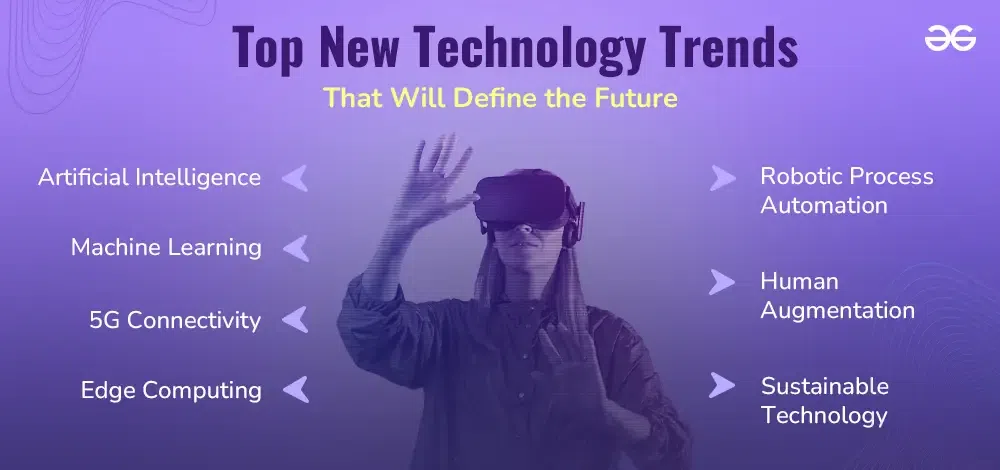
Current tech movements are transforming the relationship between people, businesses and digital systems. Artificial intelligence, automation, cloud computing, cybersecurity, IoT, robotics, sustainable technology and advanced connectivity are all contributing to a rapidly changing technology landscape. Their combined influence could shape how industries operate and how people interact with digital services for years to come.
The most successful approach is not simply to follow every new trend. Businesses and individuals should identify technologies that solve genuine problems, understand their risks and develop the skills needed to use them responsibly. By staying informed and adaptable, organisations can turn technological change into meaningful opportunities rather than allowing innovation to become a source of unnecessary disruption.
Frequently Asked Questions
What are current tech movements?
Current tech movements are major developments and shifts in technology that are influencing businesses, consumers and society. They include areas such as artificial intelligence, automation, cloud computing, cybersecurity, robotics, IoT and sustainable technology.
What are the biggest current technology trends?
Some of the most influential trends include generative AI, intelligent automation, cloud and edge computing, cybersecurity, connected devices, robotics, advanced connectivity and sustainable technology.
How is AI changing the technology industry?
AI is changing technology by supporting automation, data analysis, content creation, software development, customer service and decision-making. Generative AI is also creating new ways for people to produce and interact with digital content.
Which emerging technologies could shape the future?
Quantum computing, spatial computing, advanced robotics, next-generation networks, digital twins, advanced semiconductors and neuromorphic computing are among the technologies that could have a significant long-term impact.
How are current tech movements affecting businesses?
They can improve productivity, automate routine processes, strengthen cybersecurity, improve customer experiences and create new digital products and services. However, businesses also need to manage costs, security, skills and regulatory challenges.
Is automation going to replace human jobs?
Automation may replace certain repetitive tasks, but it can also create new responsibilities and increase demand for technical, creative and analytical skills. Many future workplaces are likely to involve greater collaboration between people and intelligent systems.
Why is cybersecurity becoming more important?
As businesses and consumers use more connected devices, cloud services and AI-powered systems, the amount of valuable digital information continues to grow. Strong cybersecurity helps protect data, systems and users from evolving digital threats.
What technology skills will be important in the future?
AI literacy, data analysis, cybersecurity awareness, cloud computing, software skills, critical thinking and adaptability are likely to remain valuable. Communication, creativity and problem-solving will also be important as technology changes the nature of many roles.
How can businesses keep up with technology trends?
Businesses should monitor relevant developments, identify practical use cases, invest in employee skills and assess new technology carefully before adoption. The goal should be to use technology to solve genuine business problems rather than adopting trends simply because they are popular.